

🤖 AI Summary
Overview
This episode delves into President Trump's controversial push to acquire Greenland, the geopolitical and economic motivations behind it, and the resulting tensions with NATO and European allies. It explores the broader implications for international relations, NATO's cohesion, and the global balance of power.
Notable Quotes
- The strong do what they can, while the weak suffer what they must.
– Mark Landler, referencing Trump's worldview.
- You cannot live within the lie of mutual benefit through integration when integration becomes the source of your subordination.
– Mark Carney, on the collapse of the rules-based international order.
- Ownership is very important to you. Why? Because that's what I feel is psychologically needed for success.
– Donald Trump, on his insistence for U.S. sovereignty over Greenland.
🗺️ The Greenland Gambit: Motivations and Strategy
- Mark Landler explains Trump's dual motivations: a real estate-driven desire to expand U.S. territory and a strategic interest in Greenland's rare earth minerals and Arctic location.
- Trump views ownership as essential for exploiting Greenland's resources and securing U.S. national security interests.
- Critics argue the U.S. already has significant access to Greenland under existing agreements, making full ownership unnecessary.
🌍 NATO and European Resistance
- European leaders, alarmed by Trump's aggressive stance, rallied to defend Denmark's sovereignty over Greenland.
- NATO allies, including France, Germany, and the UK, pledged military support to Denmark, signaling a rare show of unity against U.S. pressure.
- Trump's threats of tariffs on Denmark and other European nations escalated the crisis into an economic standoff.
🏔️ Davos and the Collapse of the Rules-Based Order
- At Davos, Trump delivered a menacing speech emphasizing U.S. dominance and dismissing multilateralism.
- Mark Carney, Canada's Prime Minister, responded with a landmark speech declaring the end of the rules-based international order and urging middle powers to adapt to a predatory global environment.
- European leaders began openly resisting Trump's tactics, marking a shift from placation to confrontation.
⚖️ NATO's Existential Crisis
- The Greenland saga exposed deep fractures within NATO, as the U.S., its central member, posed a direct threat to another member state.
- Mark Landler describes how this incident undermines NATO's foundational principles of mutual defense and sovereignty protection.
- European nations are now exploring alternative alliances and strategies to reduce reliance on the U.S.
🇨🇳 The China Factor and Global Realignment
- Trump's actions inadvertently push European and middle-power nations closer to China, as they seek alternatives to U.S. dependence.
- Mark Landler highlights the irony: Trump's foreign policy, aimed at countering China, may ultimately strengthen China's global influence.
- European nations are beginning to balance their interests between the U.S. and China, signaling a shift in global alliances.
AI-generated content may not be accurate or complete and should not be relied upon as a sole source of truth.
📋 Episode Description
President Trump has been raising tensions around the world for weeks by claiming that he would stop at nothing in his quest to seize Greenland from Denmark.
But on Wednesday, he appeared to back down, announcing that he’d reached the framework of an agreement with NATO over Greenland’s future.
Mark Landler, the London bureau chief, explains the ups and downs of Mr. Trump’s Greenland gambit, and why it may signal the beginning of a new world order.
Guest: Mark Landler, the London bureau chief of The New York Times, working with a team of correspondents to cover the United Kingdom.
Background reading:
- Mr. Trump said he had a framework for a Greenland deal as NATO mulled the idea of U.S. sovereignty over bases.
- For decades, leaders have gathered in Davos, Switzerland, to discuss a shared economic and political future. On Wednesday, Mr. Trump turned the forum into a bracing clash between his worldview and theirs.
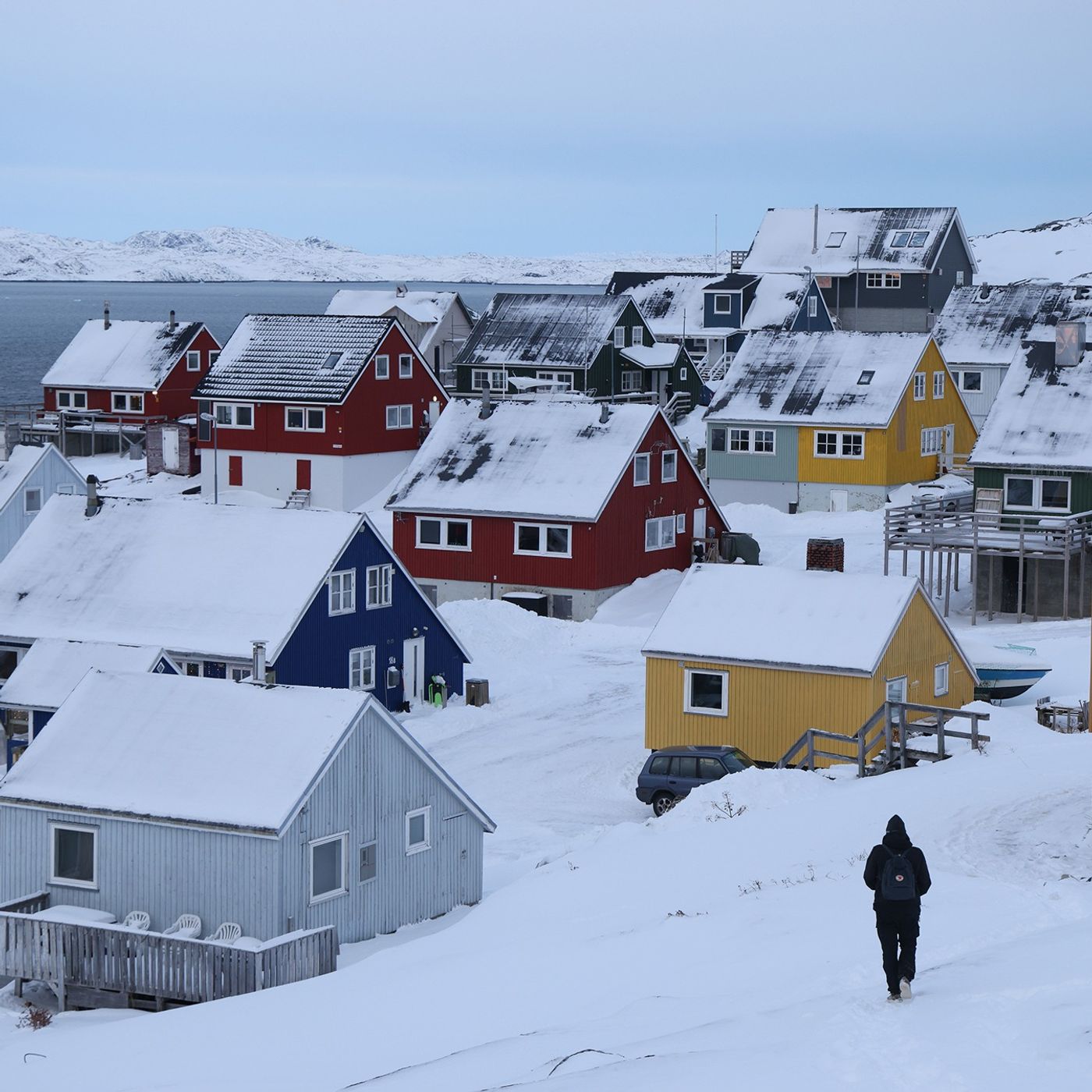
Photo: Sean Gallup/Getty Images
For more information on today’s episode, visit nytimes.com/thedaily. Transcripts of each episode will be made available by the next workday.
Subscribe today at nytimes.com/podcasts or on Apple Podcasts and Spotify. You can also subscribe via your favorite podcast app here https://www.nytimes.com/activate-access/audio?source=podcatcher. For more podcasts and narrated articles, download The New York Times app at nytimes.com/app.