

🤖 AI Summary
Overview
This episode delves into the origins and implications of the Supreme Court's shadow docket,
a process that allows the court to issue major rulings rapidly and with minimal explanation. Through a New York Times investigation, Jodi Kantor and Adam Liptak uncover the pivotal five days in 2016 that marked the beginning of this controversial practice, focusing on a case involving President Obama's Clean Power Plan. The discussion explores the procedural shifts, internal debates among justices, and the broader consequences for judicial legitimacy and public trust.
Notable Quotes
- The act of writing an opinion for a judge is the act of saying, 'Here's why you should trust me.' When the Supreme Court changes its way of operating and does that so much less, there is truly a risk to the legitimacy of the institution.
— Jodi Kantor, on the erosion of public trust.
- This is not the court doing A-plus work. This is the court throwing ideas around, seeming to be motivated by grievances against a president.
— Adam Liptak, on the quality of shadow docket rulings.
- I am of the mind that a rule designed to transform a substantial swath of the nation's economy should be tested by this court before it is presented as a fait accompli.
— Chief Justice John Roberts, in a memo advocating for intervention in the Clean Power Plan case.
🕵️♂️ The Birth of the Shadow Docket
- The shadow docket bypasses the Supreme Court's traditional deliberative process, allowing for rapid rulings with minimal reasoning.
- The practice gained prominence in 2016 during a case involving President Obama's Clean Power Plan, which sought to shift the U.S. energy sector toward cleaner sources.
- Chief Justice John Roberts, frustrated by perceived overreach by the EPA, pushed for an unprecedented stay on the plan, setting a new procedural precedent.
⚖️ Internal Supreme Court Debates
- Justices exchanged memos over five days, revealing stark divisions.
- Justice Breyer argued for patience, noting the Clean Power Plan's long timeline for implementation.
- Justice Kagan called the proposed intervention unprecedented
and warned against rushing such a complex case.
- Justice Alito supported immediate action, citing concerns about the court's legitimacy if it failed to intervene.
- The final 5-4 decision, led by Roberts, blocked the Clean Power Plan without detailed explanation, marking a shift in the court's approach.
🌍 Broader Implications of the Shadow Docket
- Critics argue the shadow docket undermines the court's ability to deliver well-reasoned decisions, as rulings are often based on limited information and expedited timelines.
- The practice has been used to address major policy issues, including immigration and government spending, often favoring the executive branch.
- Political scientists note increased partisan voting patterns on the shadow docket compared to the court's traditional merits docket.
📉 Erosion of Public Trust
- The lack of transparency and deliberation in shadow docket rulings risks diminishing public confidence in the Supreme Court.
- The court's approval ratings are at historic lows, with its reliance on the shadow docket exacerbating concerns about partisanship and judicial overreach.
- Deliberative opinions, which explain judicial reasoning, are essential for maintaining the court's legitimacy, especially given the lifetime tenure of justices.
🔍 Investigative Revelations
- The New York Times obtained confidential memos from the justices, shedding light on their private deliberations during the Clean Power Plan case.
- These documents reveal how personal grievances, institutional concerns, and political dynamics influenced the court's decision-making process.
- The investigation underscores how the shadow docket has reshaped the court's role in American governance, often with far-reaching consequences.
AI-generated content may not be accurate or complete and should not be relied upon as a sole source of truth.
📋 Episode Description
For the past decade, the Supreme Court has relied on a rushed and secretive system to make major rulings on issues from immigration to the presidential power.
Now, a New York Times investigation brings to light the precise moment when that system began.
Jodi Kantor and Adam Liptak, who reported the story, take us inside the five days that remade the Supreme Court.
Guest:
- Jodi Kantor, a New York Times reporter whose job is to carefully uncover secrets and illuminate how power operates.
- Adam Liptak, the chief legal affairs correspondent of The New York Times and the host of The Docket, a newsletter on legal developments.
Background reading:
- The full investigation of the “shadow docket.”
- Takeaways from the Supreme Court’s secret track.
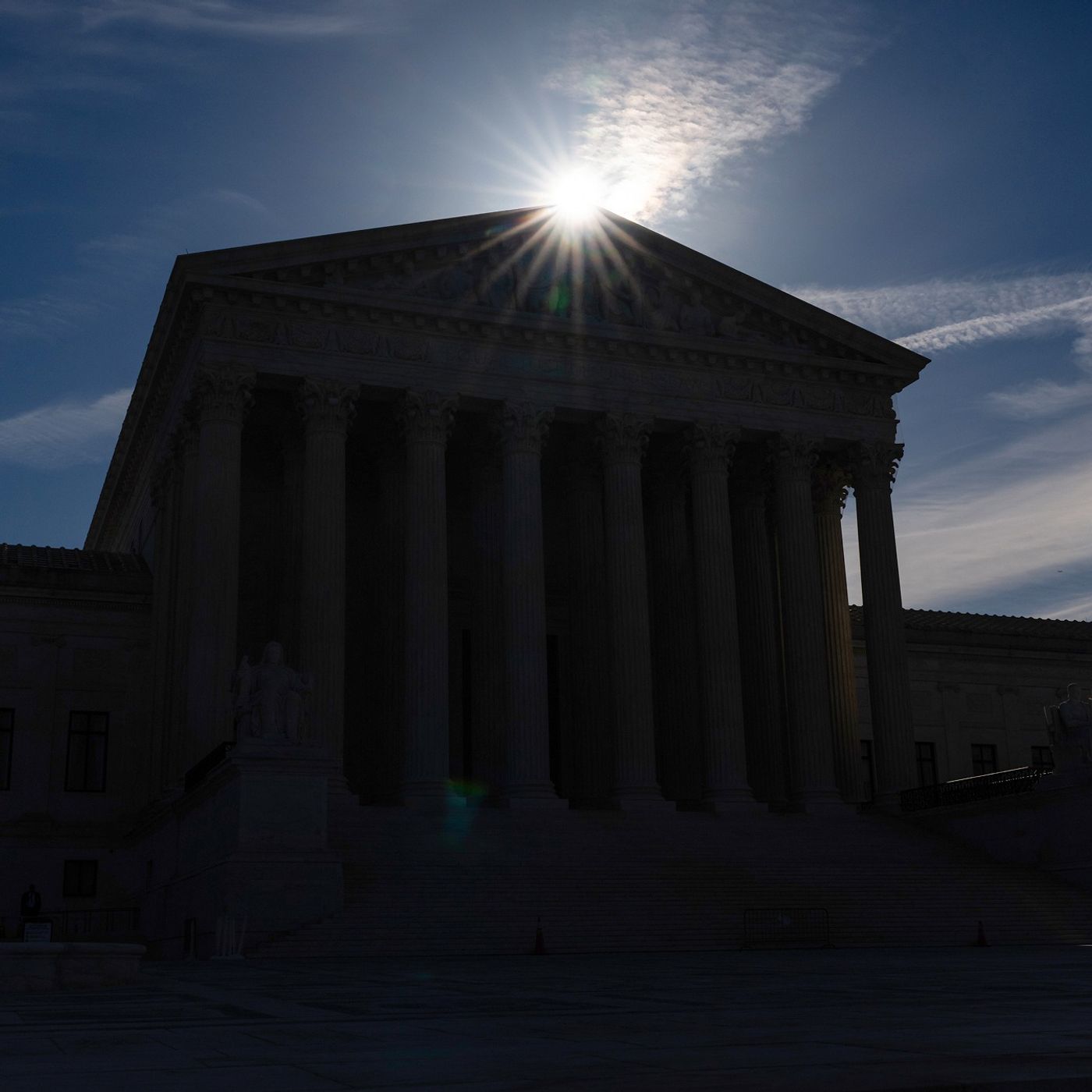
Photo: Tierney L. Cross/The New York Times
For more information on today’s episode, visit nytimes.com/thedaily. Transcripts of each episode will be made available by the next workday.
Subscribe today at nytimes.com/podcasts or on Apple Podcasts and Spotify. You can also subscribe via your favorite podcast app here https://www.nytimes.com/activate-access/audio?source=podcatcher. For more podcasts and narrated articles, download The New York Times app at nytimes.com/app.
Hosted by Simplecast, an AdsWizz company. See pcm.adswizz.com for information about our collection and use of personal data for advertising.