

🤖 AI Summary
Overview
This episode explores the Bayeux Tapestry, a nearly 1,000-year-old embroidery depicting the Norman conquest of England in 1066, which has captivated the British public during its rare and historic display at the British Museum. The discussion delves into the tapestry's cultural significance, the logistical challenges of transporting it from France, and the profound emotional connection it evokes.
Notable Quotes
- The Bayeux Tapestry is something so important. We teach it at schools. We force it down children's necks. And it is back for the first time since it was made. That, for British people, has almost set the country on fire.
— Alex Marshall, on the tapestry's cultural impact.
- Macron is the egotist behind this impossible loan. He went beyond the experts and made it happen for political, diplomatic, and showmanship reasons.
— Alex Marshall, on the French president's role in the tapestry's journey to Britain.
- There are 93 penises in this thing. 88 of them belong to horses, but the rest are human.
— Alex Marshall, highlighting the tapestry's quirky and unexpected details.
🧵 The Cultural Significance of the Bayeux Tapestry
- The tapestry is considered a foundational artifact of British history, akin to the crown jewels or Stonehenge, despite depicting a humiliating defeat.
- Its vivid storytelling, humor, and artistic detail make it a unique and accessible historical document.
- British people view it as a symbol of their identity, creativity, and resilience, even though it was created by the victors of the Norman conquest.
🚚 The Logistics of Moving a Fragile Masterpiece
- Transporting the tapestry required groundbreaking conservation techniques, including earthquake-resistant crates and meticulous route planning to avoid potholes.
- Over 100 people were involved in carefully removing it from its display in France and unpacking it in London.
- The process included a specially designed $2.7 million temperature-controlled table to display the tapestry safely.
🎭 The Drama of 1066 Depicted in Embroidery
- The tapestry narrates the events leading to the Norman conquest, including betrayal, invasion, and the Battle of Hastings.
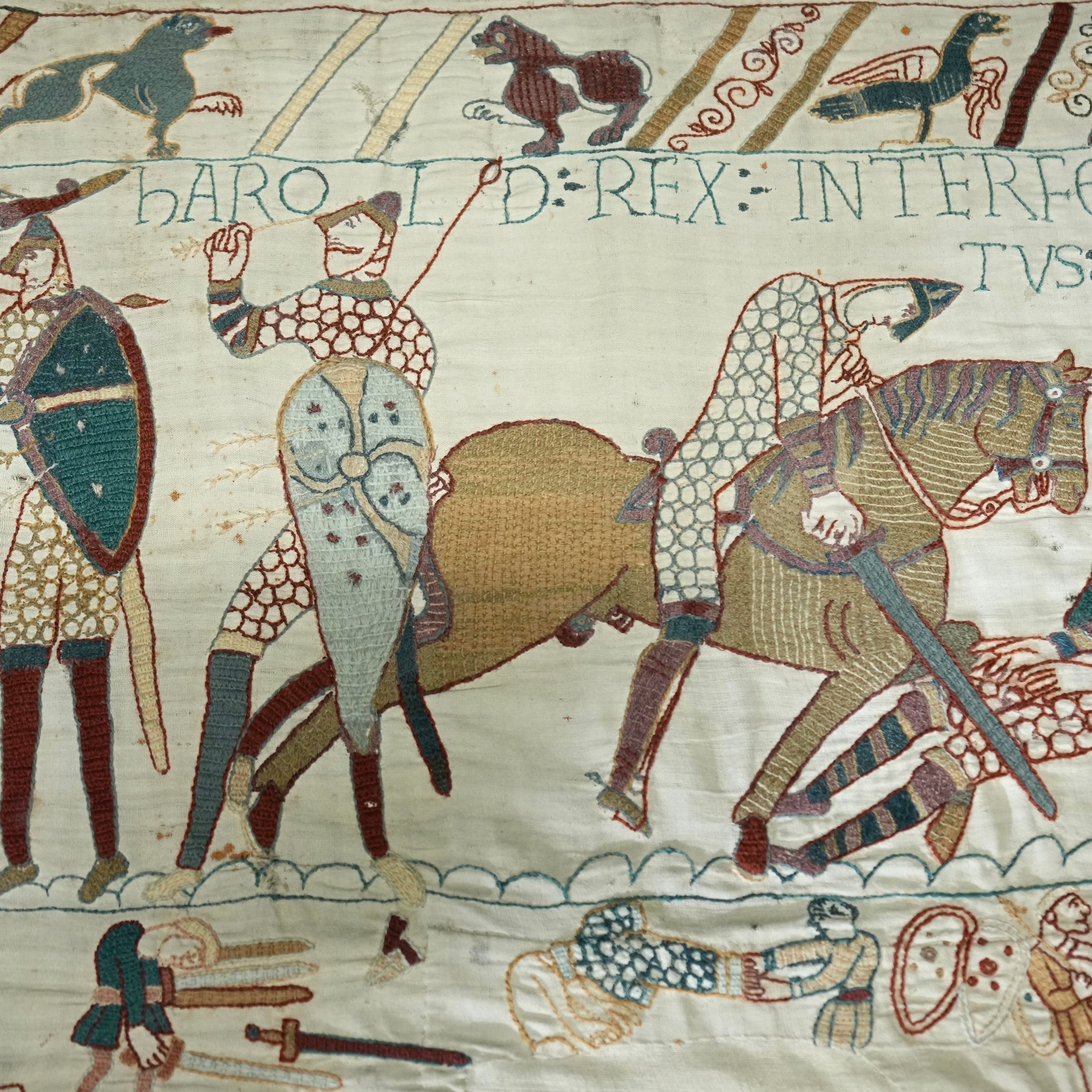
- Its scenes are rich with detail, from Halley's Comet as a bad omen to the gruesome depiction of Harold Godwinson’s death by an arrow to the eye.
- The artistry conveys humor, personality, and even surrealist elements, connecting viewers to the medieval creators.
🇫🇷 Emmanuel Macron’s Role in the Impossible Loan
- French President Emmanuel Macron announced the loan of the tapestry during a 2018 Anglo-French summit, aiming to mend post-Brexit relations.
- Despite strong opposition from conservationists, Macron pushed the loan forward, leveraging the temporary closure of the Bayeux Museum for renovations.
- The move was seen as a diplomatic gesture, showcasing France’s willingness to strengthen ties with Britain.
🎨 Public Reaction and Emotional Resonance
- The tapestry has sparked Bayeux Fever
in Britain, with tickets selling out and visitors queuing for hours to see it.
- Viewers described feeling deeply moved, with some even considering tattoos of its scenes.
- The tapestry’s ability to evoke diverse interpretations—celebration, loss, humor, and artistry—underscores its universal appeal and enduring legacy.
AI-generated content may not be accurate or complete and should not be relied upon as a sole source of truth.
📋 Episode Description
For the first time in centuries, the Bayeux Tapestry — a nearly 1,000-year-old piece of embroidery that depicts the invasion of England by William the Conqueror in 1066 — is on display in Britain.
It was long said by art experts to be too fragile to move. But in a development that required geopolitical persuasion, this summer the tapestry made its way from Bayeux, France, to the British Museum in London.
When the first block of tickets went on sale, the British Museum said, over 80,000 people at a time waited online to buy them.
In this episode of the “Sunday Daily,” Alex Marshall, a culture reporter for The New York Times, talks with host Michael Barbaro about why this ancient piece of embroidery matters so much to the British public.
On Today’s Episode:
Alex Marshall is a European culture reporter for The New York Times, based in London.
Background Reading:
- How to See a Bayeux Tapestry — Without Going to the British Museum
- A Nation Gripped by ‘Bayeux Fever’ Finally Gets to See the Tapestry
Photo credit: Kin Cheung for Associated Press.
For more information on today’s episode, visit nytimes.com/thedaily. Transcripts of each episode will be made available by the next workday.
Subscribe today at nytimes.com/podcasts or on Apple Podcasts, Spotify and Amazon Music. You can also subscribe via your favorite podcast app here https://www.nytimes.com/activate-access/audio?source=podcatcher. For more podcasts and narrated articles, download The New York Times app at nytimes.com/app.
Hosted by Simplecast, an AdsWizz company. See pcm.adswizz.com for information about our collection and use of personal data for advertising.