
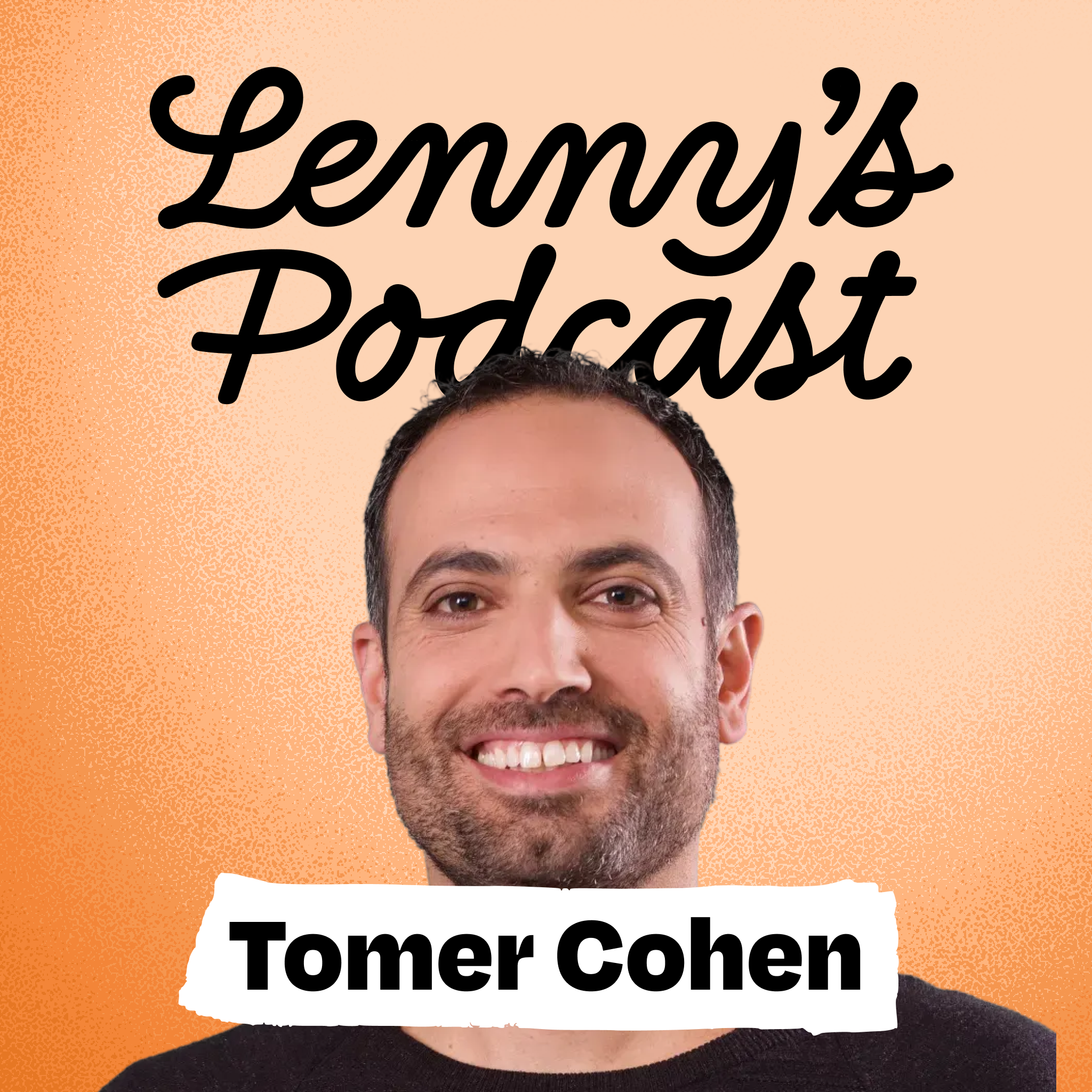
Why LinkedIn is turning PMs into AI-powered "full stack builders” | Tomer Cohen (LinkedIn CPO)

🤖 AI Summary
Overview
This episode explores LinkedIn's groundbreaking Full Stack Builder (FSB) program, led by Chief Product Officer Tomer Cohen. The program reimagines product development by integrating AI tools and collapsing traditional organizational silos, enabling individuals to take ideas from inception to launch. The conversation delves into the challenges of modern product development, the transformative potential of AI, and the cultural shifts required to make this model successful.
Notable Quotes
- Whether or not you're looking to change your job, your job is changing.
– Tomer Cohen, on the rapid evolution of skills required in the workplace.
- If you're waiting for a reorg, you're not thinking about it the right way.
– Tomer Cohen, encouraging proactive adoption of the Full Stack Builder mindset.
- Top talent has this tendency of continuously trying to get better at their craft.
– Tomer Cohen, on why high performers adopt AI tools faster.
🚀 The Need for Change in Product Development
- By 2030, 70% of the skills required for current jobs will change, driven by rapid technological advancements.
- Traditional product development processes have become overly complex, with bloated organizational structures and micro-specializations slowing innovation.
- LinkedIn's FSB model aims to simplify and accelerate product development by empowering individuals to work across traditionally siloed roles.
🤖 The Full Stack Builder Model
- The FSB program enables individuals to take products from idea to launch, blending skills across product management, design, and engineering.
- LinkedIn has introduced a formal Full Stack Builder
title and career ladder, replacing its Associate Product Manager program with an Associate Product Builder program.
- AI plays a central role, with tools automating repetitive tasks and allowing builders to focus on vision, empathy, creativity, communication, and judgment.
🛠️ Building AI-Powered Tools and Platforms
- LinkedIn has developed specialized AI agents, such as a trust agent to identify vulnerabilities, a growth agent to critique ideas, and a research agent trained on user personas.
- Off-the-shelf AI tools often fail to integrate with enterprise systems, requiring significant customization to align with LinkedIn's unique needs.
- The company is re-architecting its platforms to make them AI-ready, enabling seamless collaboration between human and machine.
🌟 Cultural Transformation and Change Management
- Cultural shifts are critical to the success of the FSB model. LinkedIn emphasizes celebrating wins, showcasing success stories, and creating exclusivity around new tools to drive adoption.
- Performance reviews now include AI fluency and agency as evaluation criteria, incentivizing employees to embrace the new model.
- Change management tactics include piloting the program with top performers, who provide feedback and inspire others through their success.
📈 Early Results and Learnings
- Early adopters, often top performers, report significant time savings and improved quality of work.
- Challenges include the need for extensive customization of AI tools and resistance from individuals who prefer specialized roles.
- The program is still in its early stages, but LinkedIn plans to scale it across the organization, with a focus on continuous improvement rather than a fixed end state.
AI-generated content may not be accurate or complete and should not be relied upon as a sole source of truth.
📋 Episode Description
Tomer Cohen is the longtime chief product officer at LinkedIn, where he’s pioneering the Full Stack Builder program, a radical new approach to product development that fully embraces what AI makes possible. Under his leadership, LinkedIn has scrapped its traditional Associate Product Manager program and replaced it with an Associate Product Builder program that teaches coding, design, and PM skills together. He’s also introduced a formal “Full Stack Builder” title and career ladder, enabling anyone from any function to take products from idea to launch. In this conversation, Tomer explains why product development has become too complex at most companies and how LinkedIn is building an AI-powered product team that can move faster, adapt more quickly, and do more with less.
We discuss:
1. How 70% of the skills needed for jobs will change by 2030
2. The broken traditional model: organizational bloat slows features to a six-month cycle
3. The Full Stack Builder model
4. Three pillars of making FSB work: platform, agents, and culture (culture matters most)
5. Building specialized agents that critique ideas and find vulnerabilities
6. Why off-the-shelf AI tools never work on enterprise code without customization
7. Top performers adopt AI tools fastest, contrary to expectations about leveling effects
8. Change management tactics: celebrating wins, making tools exclusive, updating performance reviews
—
Brought to you by:
Vanta—Automate compliance. Simplify security: https://vanta.com/lenny
Figma Make—A prompt-to-code tool for making ideas real: https://www.figma.com/lenny/
Miro—The AI Innovation Workspace where teams discover, plan, and ship breakthrough products: https://miro.com/lenny
—
Transcript: https://www.lennysnewsletter.com/p/why-linkedin-is-replacing-pms
—
My biggest takeaways (for paid newsletter subscribers): https://www.lennysnewsletter.com/i/180042347/my-takeaways-from-this-conversation
—
Where to find Tomer Cohen:
• LinkedIn: https://www.linkedin.com/in/tomercohen
• Podcast: