

🤖 AI Summary
Overview
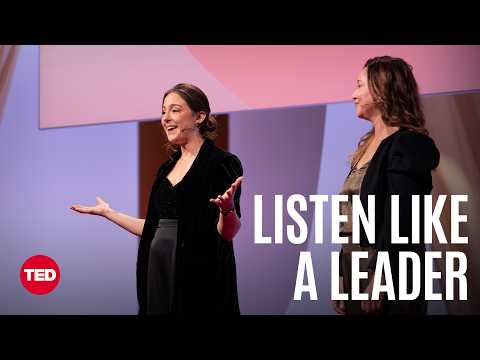
This episode explores the concept of adaptive listening, a transformative approach to workplace communication that goes beyond traditional active listening. Maegan Stephens and Nicole Lowenbraun introduce the SAID framework, which categorizes listening into four distinct styles and goals: Support, Advance, Immerse, and Discern. By adapting to the needs of the speaker, listeners can build trust, improve collaboration, and achieve faster, better results.
Notable Quotes
- Stop listening the way you want and start listening the way they need.
– Maegan Stephens, on the essence of adaptive listening.
- Great listeners sometimes interrupt.
– Nicole Lowenbraun, challenging conventional wisdom about listening etiquette.
- Work is messy, people are messy, you are all messy. But at least now you'll know why that meeting got heated, why that project stalled, why that one-on-one felt just a little bit off.
– Nicole Lowenbraun, on the challenges of workplace communication.
🧠 The Evolution of Listening at Work
- Maegan Stephens and Nicole Lowenbraun highlight that traditional active listening, designed for therapists in the 1950s, doesn’t fully address the fast-paced, goal-driven nature of modern workplaces.
- Adaptive listening focuses on understanding the speaker’s goal—whether it’s to critique, move forward, absorb details, or receive emotional support.
- Responding is a critical part of listening, and adapting your style to the speaker’s needs builds trust and accelerates results.
🎯 The Four Goals of Adaptive Listening
- Discern Listening: Used for critique and evaluation, ensuring quality and avoiding pitfalls. Example: Maegan Stephens helped an executive refine his AI-generated keynote by identifying overused phrasing.
- Immerse Listening: Closest to active listening, it’s about absorbing and remembering details without jumping to solutions. Ideal for orientations or information-heavy sessions.
- Advance Listening: Focused on driving decisions and progress, even if it means interrupting to help someone get unstuck. Nicole Lowenbraun shares how Maegan Stephens interrupted her during a brainstorming session to reframe their argument effectively.
- Support Listening: Always necessary, this style validates emotions and provides empathy, even when other goals are prioritized. Example: Maegan Stephens supported Nicole Lowenbraun after tough client feedback.
🔄 SAID Framework: Matching Styles to Goals
- The SAID framework aligns listening goals (Support, Advance, Immerse, Discern) with natural listening styles.
- Each person has a dominant style:
- Support listeners prioritize emotions and inclusivity.
- Advance listeners focus on momentum and decision-making.
- Immerse listeners value comprehensive understanding.
- Discern listeners emphasize evaluation and risk mitigation.
- Adaptive listening requires shifting from your natural style to meet the speaker’s needs, fostering better communication and outcomes.
💡 Practical Applications of Adaptive Listening
- Adaptive listening can transform workplace dynamics, from small talk with clients to high-stakes meetings.
- Leaders can use it to gauge team readiness, balancing urgency with emotional support.
- The key question to ask: What does this person need from me right now?
- With practice, adaptive listening helps navigate messy workplace interactions, ensuring trust and efficiency.
AI-generated content may not be accurate or complete and should not be relied upon as a sole source of truth.
📋 Video Description
Have you ever left a meeting thinking: everyone talked, but nothing was achieved? Chances are that people were listening to each other, just not in the same way. Listening experts Maegan Stephens and Nicole Lowenbraun unpack the four different ways to listen, sharing a practical framework that could change how you respond, build trust and get results — starting with just one simple question. (Recorded at TED@BCGon October 23, 2025)
Join us in person at a TED conference: https://tedtalks.social/events
Become a TED Member to support our mission: https://ted.com/membership
Subscribe to a TED newsletter: https://ted.com/newsletters
Follow TED!
X: https://www.twitter.com/TEDTalks
Instagram: https://www.instagram.com/ted
Facebook: https://facebook.com/TED
LinkedIn: https://www.linkedin.com/company/ted-conferences
TikTok: https://www.tiktok.com/@tedtoks
The TED Talks channel features talks, performances and original series from the world's leading thinkers and doers. Subscribe to our channel for videos on Technology, Entertainment and Design — plus science, business, global issues, the arts and more. Visit https://TED.com to get our entire library of TED Talks, transcripts, translations, personalized talk recommendations and more.
Watch more: https://go.ted.com/maeganandnicole
https://youtu.be/o_P0zoGqOYA
TED's videos may be used for non-commercial purposes under a Creative Commons License, Attribution–Non Commercial–No Derivatives (or the CC BY – NC – ND 4.0 International) and in accordance with our TED Talks Usage Policy: https://www.ted.com/about/our-organization/our-policies-terms/ted-talks-usage-policy. For more information on using TED for commercial purposes (e.g. employee learning, in a film or online course), please submit a Media Request at https://media-requests.ted.com
#TED #TEDTalks #Communication