

🤖 AI Summary
Overview
This episode explores the evolving dynamics of the K-shaped economy,
highlighting the growing financial struggles of middle-income households. It also delves into the challenges faced by small businesses amid inflation, the complexities of modern appliances, the shift in workplace policies favoring remote work, and the financial strains impacting the arts, particularly opera.
Notable Quotes
- If you like, there's a K shape opening up between higher-income households and middle-income households as well.
– David Tinsley, on the growing financial divide.
- You have to wake up in the morning believing you can do it. Otherwise, you'll just get stuck under the burden of the challenges.
– Mark Skorka, on the resilience required in the arts.
- We're impossible to please, basically.
– Kristen Schwab, on consumer dissatisfaction with modern appliances.
📉 The K within a K
Economy
- David Tinsley of Bank of America Institute notes that middle-income household spending growth is lagging behind high-income households (1% vs. 2.5%).
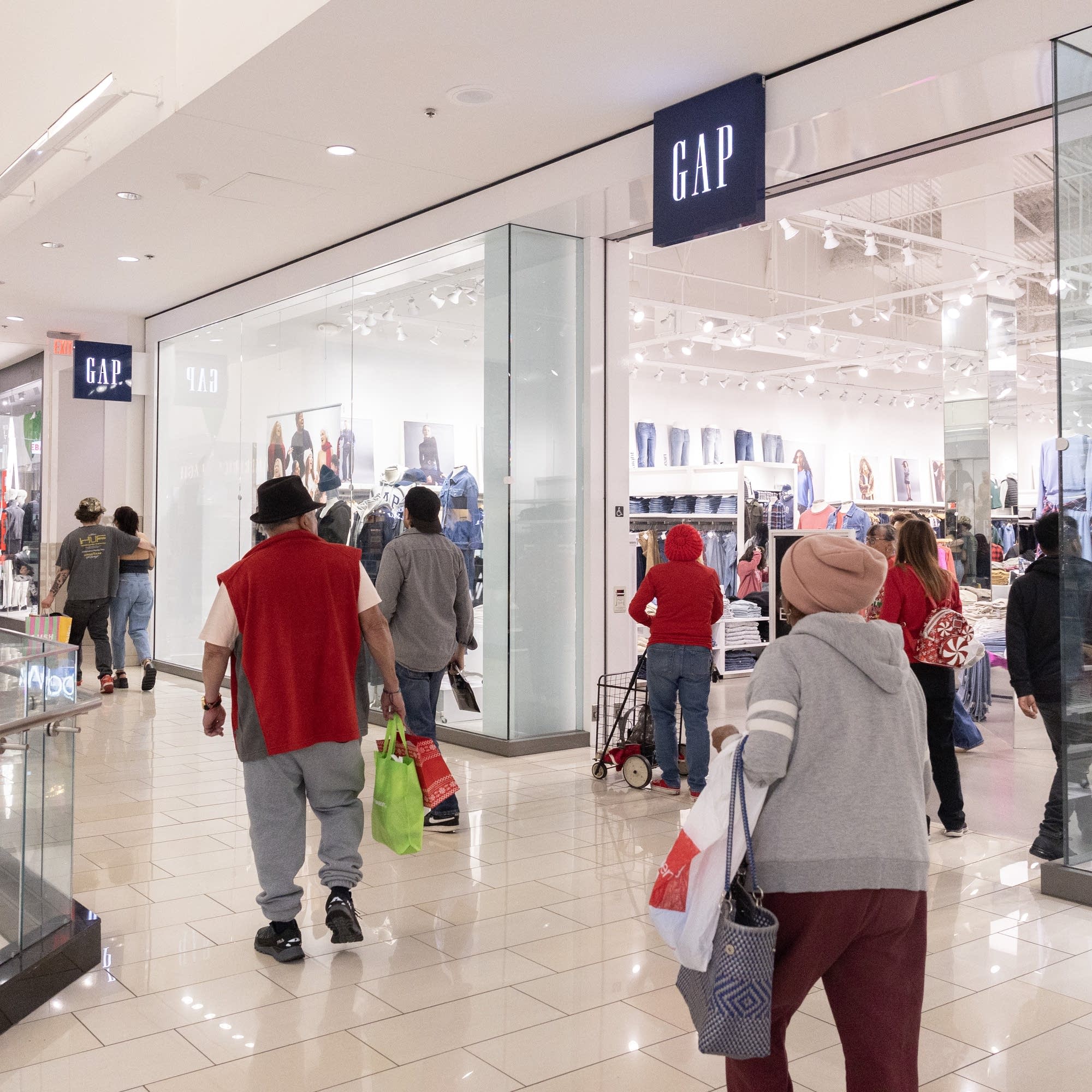
- Retailers are observing increased trade-off
behaviors, such as consumers opting for smaller product sizes or switching to store brands.
- Jessica Ramirez highlights how businesses are adjusting product assortments to minimize losses, focusing on value rather than deep discounts.
🏪 Small Business Resilience Amid Inflation
- Small business owners like Ashley Morkin (Unglued) and Catherine Lundin (Lundin’s Gifts) report mixed results, with cautious optimism despite inflation and tariff challenges.
- Businesses are adapting by controlling labor costs, improving inventory planning, and diversifying services, such as Johanna Dominguez (Put A Plant On It) expanding into corporate plant design.
- Tariffs and rising wholesale costs are forcing tough decisions, such as refusing shipments due to unsustainable pricing.
🛠️ The Problem with Fancy Appliances
- Maggie Hennessy discusses consumer frustrations with overly complex refrigerator designs, which often fail to meet practical needs.
- Manufacturers are responsive to consumer demands but face challenges balancing aesthetics, functionality, and storage space.
- Nostalgia for simpler, older appliance models persists, though they are less energy-efficient and impractical by modern standards.
🏢 Remote Work and Workplace Evolution
- A study from the National Bureau of Economic Research reveals newer firms (post-2015) are twice as likely to offer remote work compared to older firms.
- Nick Bloom of Stanford attributes this to older firms being resistant to change, while newer firms use flexibility as a hiring advantage.
- Remote work trends are reshaping housing preferences, with employees opting for suburban homes with more space when commuting less frequently.
🎭 Financial Struggles in the Arts
- The Washington National Opera's departure from the Kennedy Center highlights the financial challenges of producing opera under restrictive budget policies.
- Mark Skorka explains that reliance on ticket sales and corporate sponsorships alone is unsustainable, as contributions from donors are critical.
- Despite economic pressures, the arts community remains optimistic, with opera adapting to reflect contemporary issues and audiences.
AI-generated content may not be accurate or complete and should not be relied upon as a sole source of truth.
📋 Episode Description
When high earners ramp up their spending while low earners pull back, that’s a symptom of a "k-shaped" economy. But what about middle-income households? New evidence shows the middle class is also struggling in comparison to the wealthiest Americans. It’s sort of like a K shape within a K shape. After that: Newer firms are more likely to offer work-from-home options, Opera America has financial reasons for splitting from The Kennedy Center, and we check in with a few small businesses ahead of an upcoming inflation report.
Every story has an economic angle. Want some in your inbox? Subscribe to our daily or weekly newsletter.
Marketplace is more than a radio show. Check out our original reporting and financial literacy content at marketplace.org — and consider making an investment in our future.