
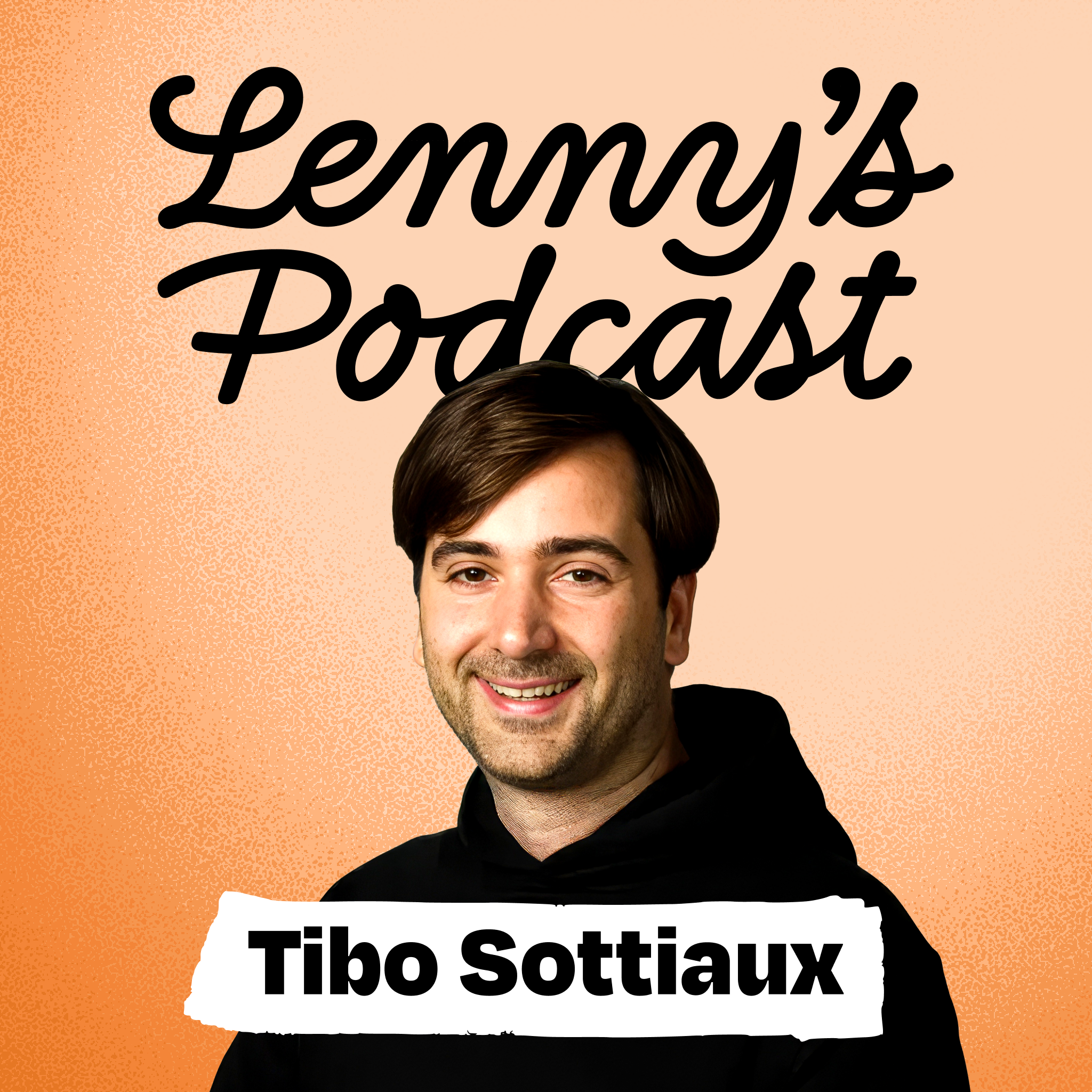
OpenAI’s Head of ChatGPT: We’re entering a new era of AI (again) | Tibo Sottiaux

🤖 AI Summary
Overview
This episode features Tibo Sottiaux, Head of ChatGPT and Codex at OpenAI, discussing the future of AI, the transformative potential of personal AI agents like OpenAI's new Dots
platform, and the evolving nature of work in the AI era. He shares insights on the role of agents in shaping the internet, the importance of community-driven development, and OpenAI's commitment to safety and alignment in AI systems.
Notable Quotes
- The majority of actions on the internet will be taken by agents.
– Tibo Sottiaux, on the future dominance of AI agents in digital interactions.
- We may not have coders anymore, but we’ll have more builders than ever.
– Tibo Sottiaux, on how AI will empower creativity and human potential.
- I just want to get rid of all of that [complexity] as quickly as we can and get to the super essence of simplicity.
– Tibo Sottiaux, on the vision for seamless AI systems.
🤖 The Rise of AI Agents
- Tibo Sottiaux predicts that most internet actions will soon be performed by AI agents, fundamentally changing how products are built and used.
- He emphasizes the need for scalable systems to accommodate agent-driven traffic, citing Notion's success with its Machine-Consumable Protocol (MCP) as an example.
- The future of AI lies in creating permanent active intelligence
that integrates seamlessly into daily life, from taking meeting notes to managing tasks across devices.
🌀 Moving Beyond Loops and Configuration Fatigue
- Tibo critiques the current focus on setting up loops and workflows for AI agents, calling it a passing phase.
Instead, he envisions systems that learn autonomously and adapt to user preferences without requiring constant configuration.
- OpenAI's Dots
platform embodies this vision, offering a single, intelligent agent that learns from user feedback and eliminates the need for complex setups like model pickers or multi-agent configurations.
🌌 Sci-Fi Inspirations and Human-Centric Design
- Tibo draws inspiration from sci-fi classics like Neuromancer and Star Trek, envisioning a future where technology serves humans seamlessly, much like the intuitive systems depicted in these works.
- He stresses the importance of designing AI as an extension of human creativity and taste, ensuring it empowers rather than replaces human effort.
🌍 Open Ecosystems and Revenue Sharing
- OpenAI is committed to fostering an open ecosystem, allowing developers to build plugins and extensions for ChatGPT.
- A revenue-sharing model ensures that popular plugins, like those from Notion or Figma, benefit financially from their integration into ChatGPT's ecosystem.
- Tibo highlights the importance of retention and utility as key metrics for plugin success, encouraging developers to focus on creating high-quality, user-centric tools.
⚡ The Future of Work and AI's Role
- AI is reshaping work by reducing repetitive tasks and enabling humans to focus on creativity and decision-making. Tibo envisions a future where AI reduces configuration fatigue
and allows for more natural, collaborative workflows.
- He acknowledges the challenges of AI-driven work, such as increased pressure to do more and the potential for loneliness, but believes AI can help mitigate these issues by enabling better work-life balance and fostering creativity.
- Skills like user empathy, creativity, and a passion for building meaningful products are becoming more valuable, while traditional skills like fast typing are becoming less relevant.
AI-generated content may not be accurate or complete and should not be relied upon as a sole source of truth.
📋 Episode Description
Tibo Sottiaux leads ChatGPT and Codex at OpenAI. Under his stewardship, OpenAI has shipped some of its most consequential consumer launches: Codex, ChatGPT Work, and most recently, the new Dots personal agent platform. He joined me at DevDay, hours after his team launched more than 20 new products, to talk about where things are heading.
We discuss:
1. Dots, OpenAI’s new personal AI assistant
2. Why most actions on the internet will soon be taken by agents
3. Why loops, graphs, and fine-tuning agent workflows are a passing phase
4. Which skills are trending up and down in the AI era
5. How Tibo’s Dot warned him about a production outage five minutes before the launch
6. OpenAI’s approach to AI safety
—
Brought to you by:
WorkOS—Make your app enterprise-ready, with SSO, SCIM, RBAC, and more
DX—Engineering intelligence for the AI era
—
Episode transcript: https://www.lennysnewsletter.com/p/openais-head-of-chatgpt-were-entering
—
Archive of all Lenny's Podcast transcripts: https://www.dropbox.com/scl/fo/yxi4s2w998p1gvtpu4193/AMdNPR8AOw0lMklwtnC0TrQ?rlkey=j06x0nipoti519e0xgm23zsn9&st=ahz0fj11&dl=0
—
Where to find Tibo Sottiaux:
• LinkedIn: https://www.linkedin.com/in/thibault-sottiaux-27195366
—
Where to find Lenny:
• Newsletter: https://www.lennysnewsletter.com
• X: https://twitter.com/lennysan
• LinkedIn: https://www.linkedin.com/in/lennyrachitsky/
—
In this episode, we cover:
(00:00) Introduction to Tibo Sottiaux
(01:12) How Tibo uses AI in his daily work
(03:10) The vision for always-on AI agents
(06:15) How AI will continue to change work
(07:32) Bringing Codex, ChatGPT, and Dots together
(08:20) The sci-fi inspiration behind the technology
(09:02) Building AI with the community
(10:13) Understanding the Dots structure
(11:34) OpenAI’s open ecosystem and plugin revenue sharing
(13:39