

🤖 AI Summary
Overview
This episode examines the Republican Party's strategy to navigate the challenging 2026 midterm elections. With Democrats leading in polls and economic dissatisfaction mounting, Republicans are focusing on financial advantages, targeted advertising, and voter turnout in deep-red states. The discussion also highlights the role of President Trump, the effectiveness of Republican messaging, and the limitations of their approach.
Notable Quotes
- This is one man—the world's richest man—completely changing the dynamics of a key Senate race.
— Shane Goldmacher, on Elon Musk's financial contributions to Republican campaigns.
- Do voters care what Talarico thinks about transgender kids, or do they care that they can't afford gas to get to work?
— Lisa Lerer, on the disconnect between Republican attacks and voter priorities.
- Right now, they're at risk of losing in states they have no business losing because so many of their own supporters are dissatisfied with their own party.
— Nate Cohn, on the Republican Party's precarious position.
🗳️ Republican Strategy and Financial Power
- Republicans are leveraging a massive financial advantage, with significant contributions from figures like Elon Musk, who has donated $276 million to GOP efforts.
- In Texas, Republicans have outspent Democrats by $175 million, focusing on negative ads linking Democrats to socialism and crime.
- Despite this financial edge, polling shows little evidence that the spending has shifted voter sentiment in key races.
📺 Messaging and Advertising Tactics
- Republican ads emphasize fear and loyalty to the party, often targeting Democratic candidates' personal lives or progressive stances.
- In Texas, Angela Paxton's ad urges Republicans to vote for the party, even if they dislike individual candidates, framing it as a broader fight for Republican values.
- However, these ads often fail to effectively attack Democratic candidates' policies, leaving their popularity intact in traditionally red states.
📉 Economic Frustration and Voter Sentiment
- Economic issues, including inflation and high gas prices, dominate voter concerns, creating a challenging environment for Republicans.
- Republican candidates struggle to distance themselves from President Trump, whose unpopularity in red states is dragging down the party.
- In Iowa, Republican Ashley Hinson publicly opposed a Trump administration policy on Russian diesel, reflecting the need for candidates to show independence on economic issues.
🎤 Debate Moments and Candidate Dynamics
- Televised debates reveal Republican candidates' attempts to discredit their opponents. For example, Susan Collins attacked her Democratic rival's legislative ineffectiveness in Maine.
- In Michigan, Mike Rogers framed his opponent Abdul El-Sayed as ideologically extreme, using fear-based rhetoric to sway voters.
- Some Republican candidates, like Troy Jackson in Maine, have struggled with public perception, highlighting the importance of candidate presentation and gravitas.
🔥 Fear-Mongering and Character Attacks
- Republicans have employed aggressive tactics, including spreading false rumors about Democratic candidates' personal lives, such as James Talarico's alleged mental health crisis.
- Vice President Vance has made inflammatory statements about Democratic candidates, including accusations of sexual perversion and attacks on religious authenticity.
- These character-driven attacks aim to paint Democrats as out of touch with mainstream values but risk alienating voters focused on economic issues.
AI-generated content may not be accurate or complete and should not be relied upon as a sole source of truth.
📋 Episode Description
With Republicans trailing in the polls, the party is making hard choices about where to spend its money — abandoning some races while pouring resources into others.
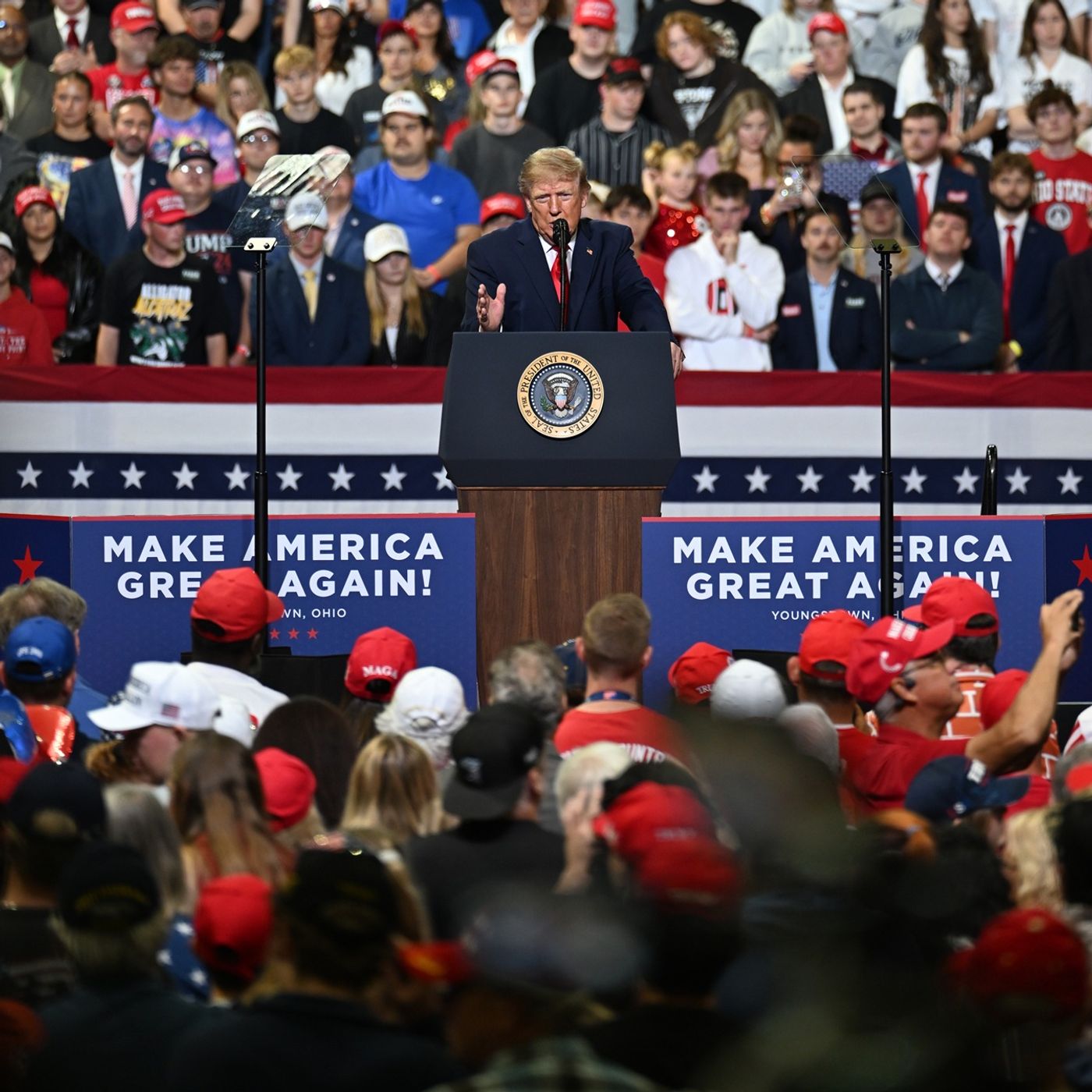
Shane Goldmacher, Zolan Kanno-Youngs and Lisa Lerer, political correspondents for The New York Times, explain why President Trump is campaigning almost daily in deep-red territory, how his influence is shaping the strategy and whether Democrats can win over the disenchanted voters they may need to take back the House and the Senate.
Guests:
- Shane Goldmacher, a national political correspondent for The New York Times.
- Zolan Kanno-Youngs, a White House correspondent for The New York Times.
- Lisa Lerer, a national political correspondent for The New York Times.
Background reading:
- Economic pain and an unpopular Trump have put the G.O.P. on its heels.
- Top Republican groups are pulling support from two House incumbents.
Photo: Kenny Holston/The New York Times
For more information on today’s episode, visit nytimes.com/thedaily. Transcripts of each episode will be made available by the next workday.
For more information on today’s episode, visit nytimes.com/thedaily. Transcripts of each episode will be made available by the next workday.
Subscribe today at nytimes.com/podcasts or on Apple Podcasts, Spotify and Amazon Music. You can also subscribe via your favorite podcast app here https://www.nytimes.com/activate-access/audio?source=podcatcher. For more podcasts and narrated articles, download The New York Times app at nytimes.com/app.
Hosted by Simplecast, an AdsWizz company. See pcm.adswizz.com for information about our collection and use of personal data for advertising.