

🤖 AI Summary
Overview
NASA's Artemis II mission marks a pivotal step in humanity's return to the moon, with four astronauts embarking on a 10-day journey to test life support systems and pave the way for future lunar exploration. This mission is not just about revisiting the moon but about establishing a long-term presence, exploring its resources, and preparing for eventual Mars missions.
Notable Quotes
- The biggest goal for the astronauts on this mission is to not die.
— Kenneth Chang, on the critical importance of testing life support systems.
- We could build a giant listening post on the far side of the moon where it's dead quiet and hear the ancient sounds of the dawn of time itself.
— Kenneth Chang, on the potential for groundbreaking scientific discoveries.
- Being first means being the one who's in charge.
— Kenneth Chang, on the geopolitical stakes of lunar exploration.
🚀 The Artemis II Mission: A Step-by-Step Approach
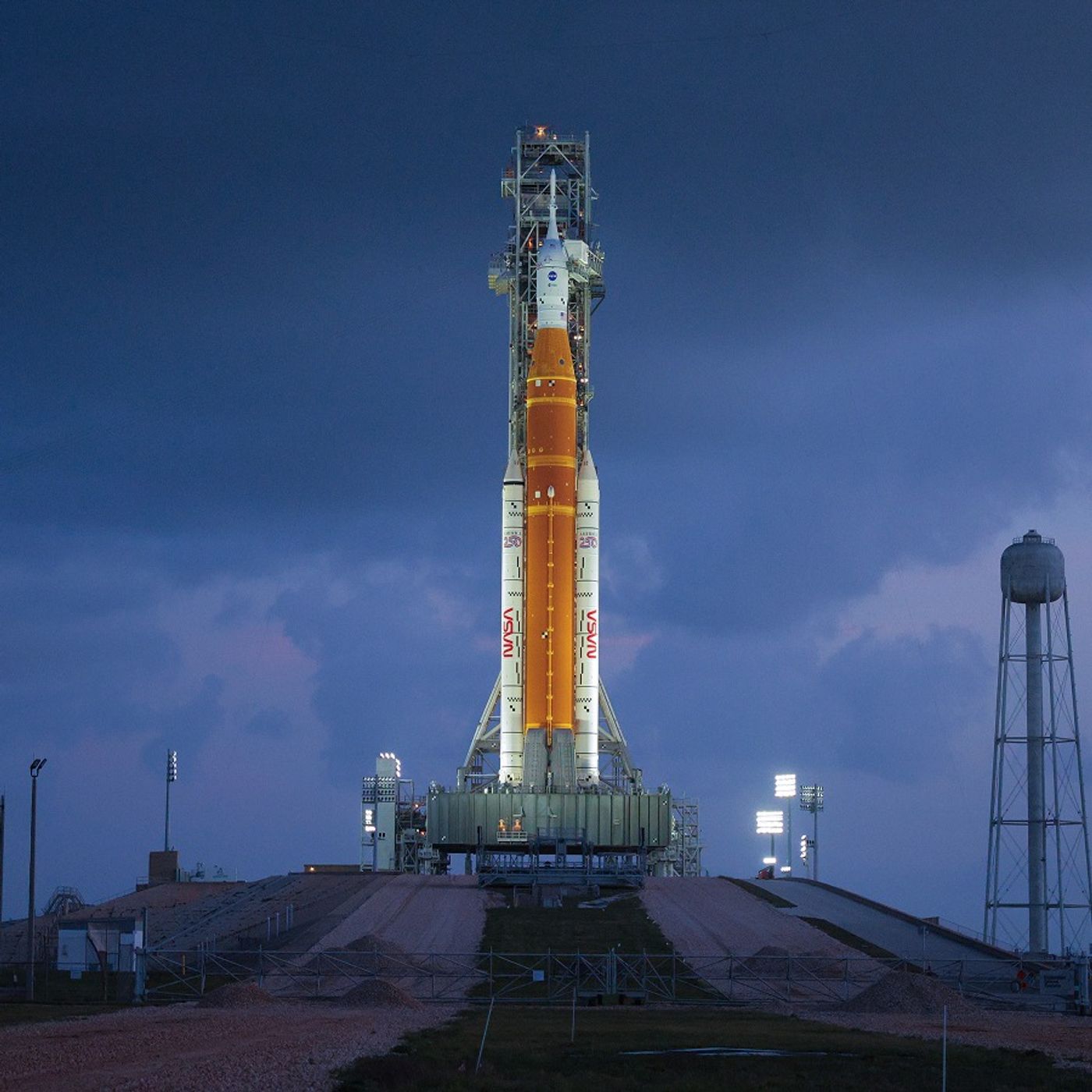
- Artemis II is the first crewed mission to the moon in over 50 years, involving a 10-day journey without landing.
- The mission's primary goal is to test life support systems with four astronauts aboard, ensuring the spacecraft can sustain human life.
- The spacecraft, Orion, will loop around Earth twice before heading to the moon, using its gravity to slingshot back to Earth.
- The crew will observe parts of the moon's far side never seen in daylight by humans.
🌕 Why Return to the Moon?
- NASA aims to establish a permanent lunar base, akin to a research station in Antarctica, with power plants and habitats for extended stays.
- The moon offers potential resources like helium-3, valuable for fusion reactors and quantum computing, with commercial mining possibilities.
- The moon serves as a testing ground for technologies needed for Mars exploration, including nuclear power and life support systems.
👩🚀 The Crew and Their Mission
- The crew includes Reed Weissman (commander), Victor Glover (first Black astronaut to go to the moon), Christina Koch (record-holder for the longest single spaceflight by a woman), and Jeremy Hansen (first non-American to venture into deep space).
- Their journey involves cramped quarters (space equivalent to two minivans) and a critical 40-minute communication blackout while orbiting the moon's far side.
- The mission concludes with a splashdown in the Pacific Ocean, marking a significant milestone for NASA.
🌌 Scientific and Geopolitical Implications
- The moon's far side offers a unique opportunity to build a radio telescope, free from Earth's noise, to study signals from the Big Bang.
- The mission underscores the U.S.'s desire to lead in space exploration, particularly in competition with China, as the first to establish a lunar presence will set the rules for space commerce and resource control.
- Artemis II represents a transition from NASA's traditional methods to increased collaboration with private companies like SpaceX and Blue Origin for future missions.
🌍 A Moment of Unity Amid Turbulence
- The mission echoes the unifying spirit of Apollo 8 in 1968, a turbulent year in U.S. history, offering a hopeful reminder of humanity's shared existence on Earth.
- The imagery of Earth from the moon could inspire a sense of global unity and calm in today's divided world.
AI-generated content may not be accurate or complete and should not be relied upon as a sole source of truth.
📋 Episode Description
Today, NASA is set to send four astronauts on a trip around the moon and back. If the mission succeeds, a return of astronauts to the moon’s surface could follow.
Kenneth Chang, who covers science, explains why the United States wants to go back to the moon.
Guest: Kenneth Chang, a science reporter at The New York Times who writes about NASA and the solar system.
Background reading:
- What to know about NASA’s Artemis II moon mission.
- For a member of the crew, the journey to the moon is “starting to feel real.”
Photo: Chip Somodevilla/Getty Images
For more information on today’s episode, visit nytimes.com/thedaily. Transcripts of each episode will be made available by the next workday.
Subscribe today at nytimes.com/podcasts or on Apple Podcasts and Spotify. You can also subscribe via your favorite podcast app here https://www.nytimes.com/activate-access/audio?source=podcatcher. For more podcasts and narrated articles, download The New York Times app at nytimes.com/app.
Hosted by Simplecast, an AdsWizz company. See pcm.adswizz.com for information about our collection and use of personal data for advertising.