

🤖 AI Summary
Overview
This episode delves into the enduring legacy of The Great Gatsby as it celebrates its centennial. A.O. Scott, a critic at large for The New York Times, joins Michael Barbaro to explore the novel's journey from initial obscurity to its status as the quintessential American novel. They discuss its themes of ambition, identity, and the American Dream, as well as its cultural impact through adaptations and its resonance in contemporary society.
Notable Quotes
- The truth was that Jay Gatsby of West Egg, Long Island, sprang from his platonic conception of himself.
– A.O. Scott, quoting Fitzgerald to highlight Gatsby's self-invention.
- What is MAGA other than a pleading to reclaim a past that’s so central to this book?
– Michael Barbaro, drawing parallels between Gatsby’s nostalgia and modern political rhetoric.
- Is the American project fundamentally tragic?
– Michael Barbaro, questioning the deeper implications of the novel’s themes.
📖 The Great Gatsby’s Journey to Cultural Prominence
- Initially published in 1925, the novel was met with tepid reviews and commercial failure. Critics dismissed it as a fleeting, seasonal read.
- Its revival began during World War II, when it was distributed to soldiers as part of armed forces editions. This reintroduction coincided with efforts to define an American literary canon post-war.
- By the mid-20th century, The Great Gatsby became a staple in high school syllabi, celebrated for its brevity, readability, and thematic richness.
🎭 Adaptations and Pop Culture Resonance
- The novel has inspired multiple film adaptations, including the 1974 version starring Robert Redford and Baz Luhrmann’s 2013 extravaganza with Leonardo DiCaprio.
- The 2013 adaptation highlighted parallels between Gatsby’s self-invention and hip-hop culture, with Jay-Z producing the soundtrack.
- References to Gatsby permeate TV shows like The Simpsons and Seinfeld, embedding the novel into American pop culture.
💡 Themes of Identity, Fraud, and the American Dream
- Gatsby’s self-invention reflects the quintessential American ideal of reinvention, but also its darker side—fraud and criminality.
- The tension between old money (Tom Buchanan) and new money (Gatsby) underscores enduring questions of class, belonging, and legitimacy in America.
- The novel’s ambivalence toward wealth and morality mirrors contemporary societal debates, including the romanticization of self-made figures.
🇺🇸 America’s Myth and Tragedy
- The novel’s closing passages evoke a sense of lost potential, likening Gatsby’s doomed pursuit of Daisy to America’s own unfulfilled promises.
- A.O. Scott and Michael Barbaro discuss whether the American project was doomed from the start,
built on inequity and division.
- The book’s open-endedness allows readers to project their own interpretations, making it a mirror for America’s evolving identity.
🖋 Criticism and Enduring Mystique
- Critics like Kathryn Schulz argue the novel’s characters are mere archetypes, lacking emotional depth.
- A.O. Scott counters that the characters’ elusiveness and the novel’s ambiguity are its strengths, inviting readers to grapple with its mysteries.
- The novel’s open text
quality ensures its relevance, as each generation finds new meanings in its pages.
AI-generated content may not be accurate or complete and should not be relied upon as a sole source of truth.
📋 Episode Description
This year, “The Great Gatsby” turns 100.
A.O. Scott, a critic at large for The New York Times Book Review, tells the story of how an overlooked book by a 28-year-old author eventually became the great American novel, and explores why all of these decades later, we still see ourselves in its pages.
Guest: A.O. Scott, a critic at large for The New York Times Book Review, writing about literature and ideas.
Background reading:
For more information on today’s episode, visit nytimes.com/thedaily. Transcripts of each episode will be made available by the next workday.
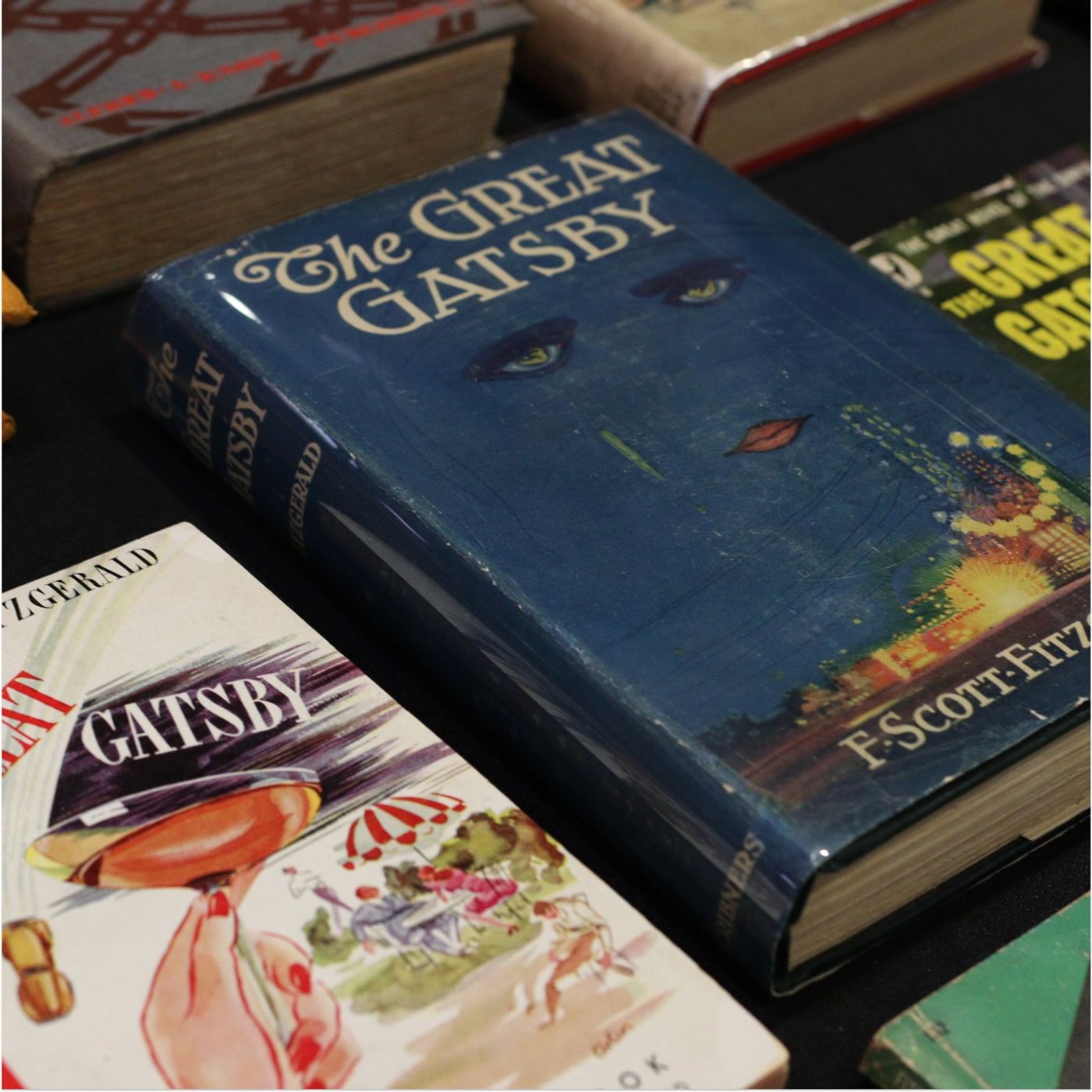
Photo: Abigail Cole/University of South Carolina Libraries
Unlock full access to New York Times podcasts and explore everything from politics to pop culture. Subscribe today at nytimes.com/podcasts or on Apple Podcasts and Spotify.