

🤖 AI Summary
Overview
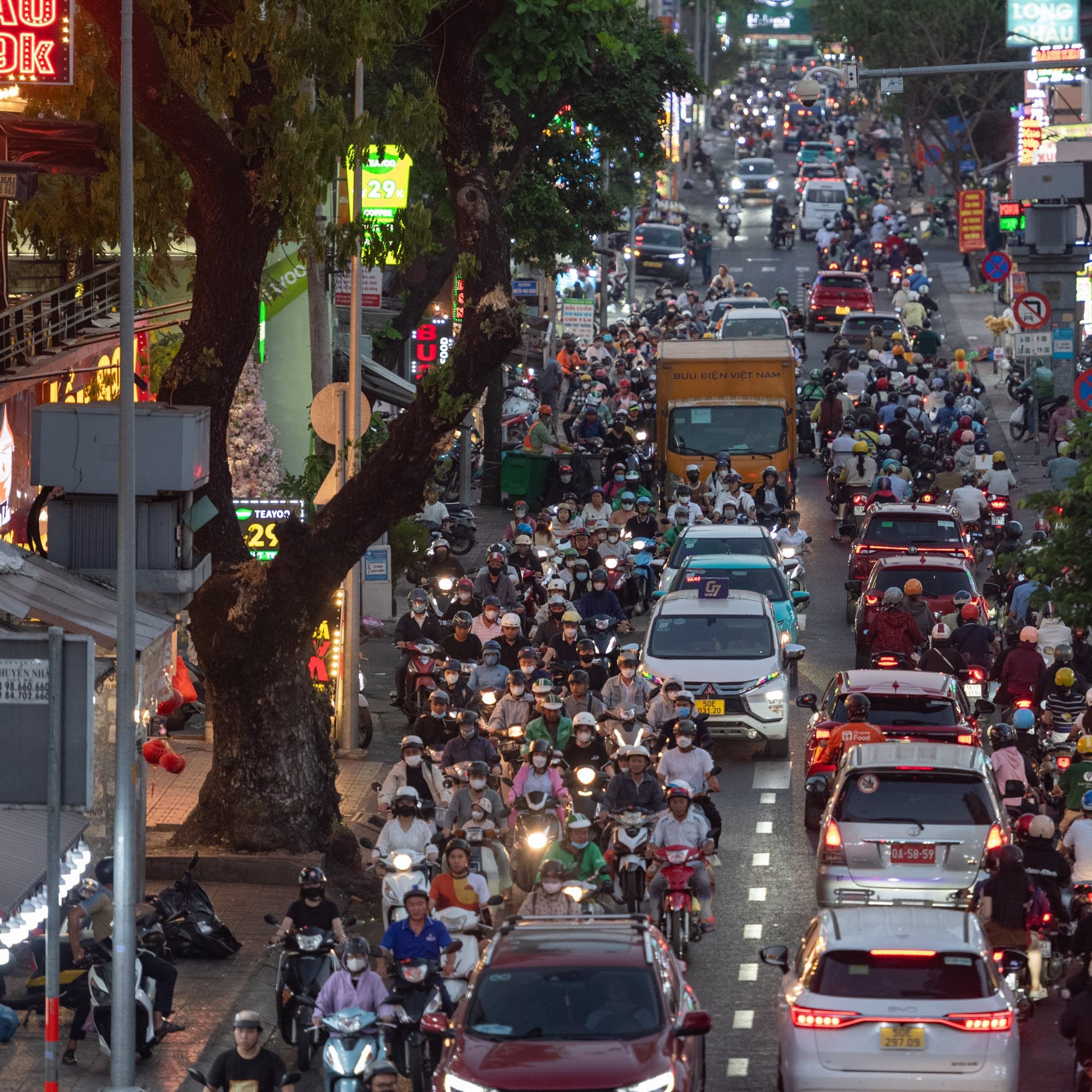
This episode explores Vietnam's economic golden age
as its workforce reaches a demographic sweet spot, with two working-age adults for every dependent. Host Kai Ryssdal and ADP chief economist Nela Richardson visit a garment factory and a bustling market in Ho Chi Minh City to examine the opportunities and challenges of Vietnam's growing role in the global economy. The episode also delves into rising transportation costs, oil demand destruction, and the Federal Reserve's policy dilemmas.
Notable Quotes
- Vietnam is at its peak. If this was tennis, Vietnam would be the sweet spot.
– Nela Richardson, on Vietnam's demographic advantage.
- The most worry is the politics changing. Right now, the politics can change after two weeks.
– Henry Pham, on the challenges of running a global business in a volatile geopolitical climate.
- We kind of supply shock ourselves into stagflation, which is the hardest problem for the Fed to solve.
– Catherine Rampell, on the economic risks of rising oil prices and falling output.
🛢️ Rising Transportation Costs and Oil Demand Destruction
- The producer price index rose 0.5% month-to-month, driven by a 14% increase in wholesale gas prices and a staggering 40% rise in diesel prices.
- Businesses like Palmetto Tile Distributors are facing fuel surcharges of 15-25%, forcing them to consolidate shipments or pass costs onto customers.
- Catherine Rampell explains demand destruction,
where high oil prices lead to reduced consumption, potentially slowing global economic activity.
- The Federal Reserve faces a dilemma: raising interest rates to curb inflation could exacerbate stagnation, leading to stagflation.
👕 Vietnam's Workforce and Economic Growth
- Vietnam's demographic advantage—two working-age adults per dependent—positions it as a key player in global manufacturing and economic growth.
- Henry Pham, a garment factory owner, highlights how Vietnam's skilled workforce and competitive costs enable him to export 90% of his products globally.
- However, U.S. policy changes, such as tariffs on shipments under $800, have disrupted his ability to invest in worker-friendly upgrades like air conditioning.
- Nela Richardson emphasizes that Vietnam's golden age
won't last forever, urging the country to capitalize on its current workforce advantage.
🏭 Challenges of Globalization in Vietnam
- At a Ho Chi Minh City market, vendors like Ms. Vuong and Mr. Yung face declining sales due to technological changes and competition from online platforms.
- Younger generations in Vietnam are shifting away from traditional labor-intensive jobs to white-collar roles, reflecting broader economic transitions.
- Despite these challenges, Vietnam remains a top apparel supplier to the U.S., with companies like Nike and Crocs relying heavily on its manufacturing capabilities.
📉 Geopolitical Instability and Economic Risks
- Geopolitical instability, such as conflicts in the Middle East, is disrupting supply chains and creating uncertainty for businesses like Henry Pham's.
- The International Monetary Fund warns that global growth could slow from 3.3% to 3.1% due to the economic fallout from ongoing conflicts.
- Vietnam's economic future depends on balancing its current advantages with the risks posed by global and domestic political changes.
AI-generated content may not be accurate or complete and should not be relied upon as a sole source of truth.
📋 Episode Description
As the U.S. population ages, our economy will rely more on nations with younger workforces. Nations like Vietnam, where there are two working-age adults for every dependent. As part of our ongoing Age of Work series, host Kai Ryssdal and ADP chief economist Nela Richardson visit a garment factory and outdoor vendor market in Ho Chi Minh City to learn more about Vietnam’s economy. But first: Companies contend with higher transportation costs and the Fed faces oil industry demand destruction.
Every story has an economic angle. Want some in your inbox? Subscribe to our daily or weekly newsletter.
Marketplace is more than a radio show. Check out our original reporting and financial literacy content at marketplace.org — and consider making an investment in our future.