

🤖 AI Summary
Overview
This conversation between horticulturist Rebecca McMackin and author Catherine Price explores the cultural obsession with productivity and its impact on our well-being. They discuss the importance of fun, play, and reconnecting with nature as antidotes to burnout and over-scheduling. From gardening to redefining productivity, the discussion offers actionable insights for cultivating a more balanced and joyful life.
Notable Quotes
- Fun is a feeling. It’s the confluence of playfulness, connection, and flow.
– Catherine Price, on redefining fun.
- Planting a garden means believing in tomorrow.
– Rebecca McMackin, on the hopeful act of gardening.
- The most valuable things in life often require friction—they’re not easy, but they’re worth it.
– Catherine Price, on resisting the lure of convenience.
🌱 Rethinking Productivity
- Catherine Price challenges the traditional view of productivity as tied to financial or tangible outcomes, advocating for a broader definition that includes meaningful, non-quantifiable activities like deep conversations or gardening.
- Gardening, according to Rebecca McMackin, can be a form of self-care and a way to escape the relentless drive for efficiency. It reconnects people to the earth and fosters a sense of purpose beyond output.
- Both speakers emphasize the importance of carving out time for activities that nourish the soul, even if they don’t produce measurable results.
🎉 The Power of Fun
- Catherine Price defines fun as the intersection of playfulness, connection, and flow, urging people to prioritize it as a vital part of life.
- Fun doesn’t have to be extravagant or expensive. Simple moments, like playing music with friends or catching leaves with a child, can be deeply fulfilling.
- Rituals like Taco Tuesdays or spontaneous acts of playfulness can create meaningful connections and serve as a respite from daily pressures.
🌸 Gardening as Activism and Connection
- Growing plants like tomatoes and milkweed is framed as a small but impactful act of hope and environmental activism. Rebecca McMackin highlights how these gestures can reconnect people with the natural world and support struggling ecosystems.
- Gardening is described as a way to cultivate a sense of aliveness and contribute to a better future, offering both personal joy and ecological benefits.
- The speakers advocate for reducing lawn space in favor of wildflowers, which support biodiversity and challenge the cultural obsession with control.
🌀 Letting Go of Control
- Both speakers discuss the relief and joy that come from relinquishing control. Rebecca McMackin finds solace in the presence of ancient trees, which remind her of humanity’s smallness in the grand ecosystem.
- Play is presented as a way to practice letting go, with Catherine Price noting that structured play spaces (like games or roughhousing with rules) allow people to relax and embrace spontaneity.
- Letting go of control can also mean rebelling against societal norms, like taking a different route home or singing loudly to a favorite song.
📵 Adding Friction to Modern Life
- Catherine Price argues that friction is essential for reclaiming time and attention in a world designed to keep us glued to screens. For example, removing phones from bedrooms can help people rediscover hobbies like reading.
- Adding friction to unhelpful habits (e.g., doomscrolling) and reducing friction for meaningful activities (e.g., placing a book by your bed) can transform daily routines.
- Both speakers push back on the idea that modern life is designed for ease, pointing out that true ease comes from intentional living, not mindless consumption.
AI-generated content may not be accurate or complete and should not be relied upon as a sole source of truth.
📋 Video Description
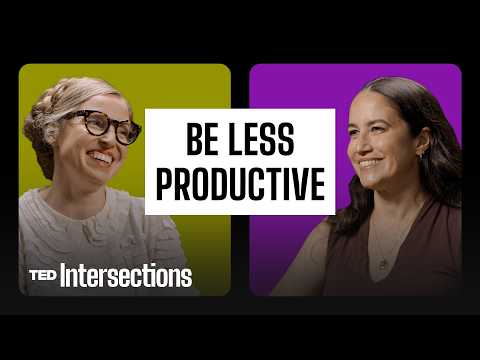
Why are we so obsessed with productivity? Horticulturist Rebecca McMackin (who wants people to let their lawns grow wild) and author Catherine Price (who wrote a book about the power of fun) come together to discuss the relief of giving up control. From growing milkweed to taking up unproductive hobbies, they dig into the benefits of rest — and why doing something for its own sake shouldn't need defending. (This conversation is part of “TED Intersections,” a series featuring thought-provoking conversations between experts navigating the ideas shaping our world.)
Join us in person at a TED conference: https://tedtalks.social/events
Become a TED Member to support our mission: https://ted.com/membership
Subscribe to a TED newsletter: https://ted.com/newsletters
Follow TED!
Instagram: https://www.instagram.com/ted
LinkedIn: https://www.linkedin.com/company/ted-conferences
TikTok: https://www.tiktok.com/@tedtoks
Facebook: https://facebook.com/TED
X: https://www.twitter.com/TEDTalks
The TED Talks channel features the best talks and performances from the TED Conference, where the world's leading thinkers and doers give the talk of their lives in 18 minutes (or less) — plus originals, podcasts and exclusive content. Look for videos on Technology, Entertainment and Design as well as science, business, global issues, the arts and more. Visit https://TED.com for our entire library, transcripts, translations and personalized recommendations.
Watch more: https://go.ted.com/tedintersections
https://youtu.be/Zgu97mCGS74
TED videos may be used for non-commercial purposes under a Creative Commons License, Attribution–Non Commercial–No Derivatives (or the CC BY – NC – ND 4.0 International) and in accordance with the TED Talks Usage Policy: https://www.ted.com/about/our-organization/our-policies-terms/ted-talks-usage-policy. For more information on using TED for commercial purposes (e.g. employee learning, in a film or online course), submit a request at https://media-requests.ted.com
#TED #TEDTalks #PersonalGrowth