

🤖 AI Summary
Overview
This episode explores the dramatic shift in the Trump administration's stance on artificial intelligence (AI) regulation, culminating in a watered-down executive order. It delves into the internal White House debates, the influence of tech leaders, and the broader political and societal implications of AI oversight.
Notable Quotes
- Artificial intelligence and a free society are absolutely and totally incompatible. Full freaking stop.
– Steve Bannon, on his deep skepticism of AI's societal impact.
- The AI industry is a beautiful baby, and you don't want rules to get in the way of a beautiful baby when it's taking its first steps.
– Donald Trump, explaining his initial hands-off approach to AI regulation.
- The future of AI and the fate of humanity must not be decided behind closed doors by the wealthiest people in the world.
– Bernie Sanders, advocating for public ownership of AI companies.
🖥️ The Trump Administration's AI Pivot
- Initially, the administration embraced a hands-off approach, championed by AI czar David Sacks, who argued that regulation would stifle innovation and hinder U.S. dominance over China in AI.
- A turning point came in April when Anthropic unveiled a powerful AI model, Mythos, capable of identifying software vulnerabilities, raising fears of cyberattacks.
- Pressure from tech leaders like Microsoft and JPMorgan Chase CEO Jamie Dimon, as well as internal White House figures like Treasury Secretary Scott Bessant, led to a reconsideration of the administration's stance.
📜 The Executive Order Drama
- The initial draft proposed a 90-day review period for AI models before public release, akin to FDA drug approvals. This alarmed Silicon Valley, fearing it would stifle innovation.
- After pushback from tech leaders, including Mark Zuckerberg and David Sacks, Trump canceled the signing ceremony, citing concerns about slowing the industry.
- A revised order reduced the review period to 30 days and explicitly ruled out mandatory licensing, appeasing both the tech industry and White House skeptics.
⚖️ Populist Push for Stronger Regulation
- On the right, Steve Bannon and religious leaders voiced concerns about AI's moral and societal risks, including its potential to erode family values and working-class stability.
- On the left, Bernie Sanders proposed radical measures, including a moratorium on AI development and a sovereign wealth fund granting the U.S. a 50% ownership stake in major AI companies.
- Both factions see AI as a disruptive force requiring robust government intervention, though their motivations differ.
🌐 The Industry's Response and Public Sentiment
- The AI industry faces a growing trust deficit, highlighted by public opposition and incidents like a Molotov cocktail attack on OpenAI CEO Sam Altman's home.
- OpenAI has since called for Congress to adopt more rigorous AI regulations, signaling a shift in its stance. However, skepticism remains about whether this is genuine or a PR move.
- Despite the executive order, meaningful regulation may only emerge after a major crisis, akin to the FAA's creation following plane crashes or financial reforms post-2008.
📊 Economic and Political Stakes
- AI is driving a significant portion of U.S. GDP growth, complicating regulatory efforts.
- While the economic benefits are concentrated among a few, public anxieties about job loss, privacy, and societal disruption are mounting.
- If these concerns gain broader traction, bipartisan pressure for substantial regulation could become unavoidable.
AI-generated content may not be accurate or complete and should not be relied upon as a sole source of truth.
📋 Episode Description
President Trump has begrudgingly accepted that artificial intelligence requires oversight and on Tuesday signed an executive order asking companies to voluntarily give the government access to new models before they’re released to the public.
Tripp Mickle, who covers Silicon Valley, discusses the battle in the White House over the issue and how it played out over the last few weeks.
Guest: Tripp Mickle, who reports about Silicon Valley for The New York Times from San Francisco.
Background reading:
- Mr. Trump signed an executive order seeking oversight of A.I. models.
- Here’s what’s driving Mr. Trump’s big A.I. pivot.
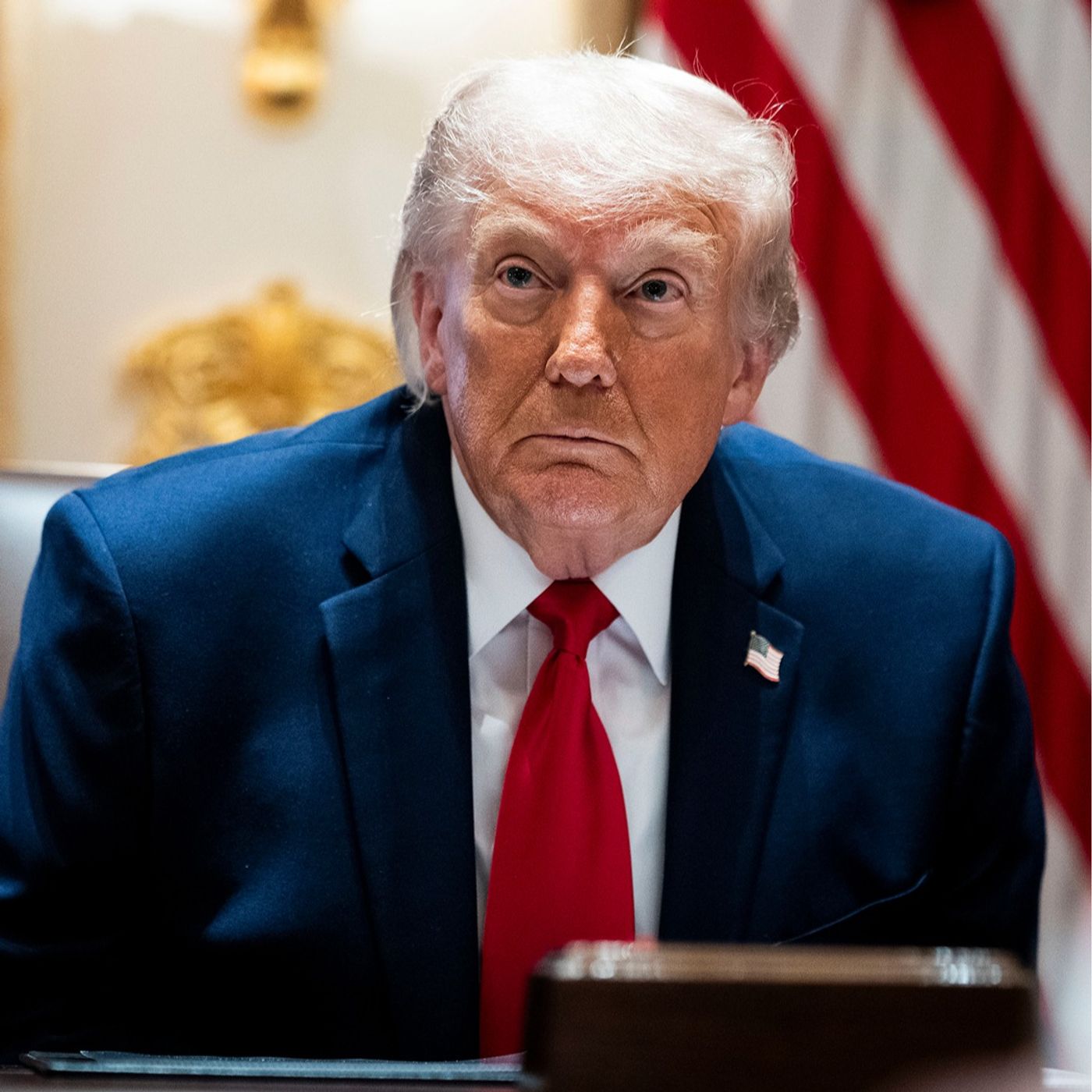
Photo: Doug Mills/The New York Times
For more information on today’s episode, visit nytimes.com/thedaily. Transcripts of each episode will be made available by the next workday.
Subscribe today at nytimes.com/podcasts or on Apple Podcasts and Spotify. You can also subscribe via your favorite podcast app here https://www.nytimes.com/activate-access/audio?source=podcatcher. For more podcasts and narrated articles, download The New York Times app at nytimes.com/app.
Hosted by Simplecast, an AdsWizz company. See pcm.adswizz.com for information about our collection and use of personal data for advertising.