

🤖 AI Summary
Overview
This episode examines the controversial tenure of Kash Patel as FBI director under the Trump administration. Journalists Emily Bazelon and Rachel Poser share insights from their investigation, which involved interviews with dozens of current and former FBI employees. The discussion highlights how Patel's leadership has reshaped the agency, focusing on political pressures, operational changes, and the impact on the FBI's mission and culture.
Notable Quotes
- The director, the leader of the FBI, is representing the organization in a juvenile manner.
– John Sullivan, on Kash Patel's focus on optics over substance.
- You can get fired today or you can get fired in four years when another administration comes in and starts looking and seeing who had violated the law.
– Jill Fields, on the pressure to comply with questionable directives.
- To so casually discard such people as if they were like a used-up tissue... it is careless.
– Tanya Yugorits, on the dismissal of experienced FBI personnel under Patel's leadership.
🕵️♂️ The Politicization of the FBI
- Kash Patel's appointment as FBI director marked a significant departure from tradition, as he lacked prior FBI experience and had a history of promoting conspiracy theories.
- Patel's leadership style, described as erratic and partisan, created widespread concern within the agency.
- His deputy, Dan Bongino, a former Secret Service agent and pro-Trump commentator, further fueled skepticism with his conspiratorial rhetoric and calls to disband the FBI.
- Political loyalty became a key factor, with employees who had worked on investigations involving Trump facing scrutiny and dismissal.
📊 Optics Over Operations
- Patel prioritized optics and social media presence, often at the expense of operational efficiency.
- Agents were instructed to take photos during raids for social media, compromising safety and operational security.
- Patel's focus on public image extended to international incidents, such as attempting to post sensitive photos from a secret intelligence conference.
- His leadership style was described as performative, with decisions driven by how they would be perceived by Trump rather than their impact on the FBI's mission.
🚨 Operational Disruptions and Reassignments
- Under Patel, agents were reassigned from core FBI priorities like counterterrorism and public corruption to immigration enforcement, a domain traditionally outside the FBI's scope.
- Analysts like Jill Fields were pressured to investigate protesters exercising First Amendment rights, highlighting a shift toward politically motivated actions.
- These changes led to frustration, resignations, and a sense of mission drift among FBI personnel.
⚖️ Purges and Fear Culture
- Patel initiated a purge
of employees who had worked on investigations involving Trump, creating a culture of fear within the agency.
- High-ranking officials like Tanya Yugorits and Blair Tolman were demoted or dismissed, often based on tenuous or politically motivated accusations.
- Employees feared that their past work could jeopardize their careers under the current administration, leading to hesitancy in pursuing politically sensitive cases.
🔍 Lawsuits and Accountability
- Fired agents, including Blair Tolman, have filed lawsuits against the FBI, alleging political purges and lack of due process.
- Many agents turned to the media and courts as internal channels for addressing grievances were perceived as ineffective.
- The broader concern is that the politicization of the FBI under Patel's leadership has compromised its independence and ability to protect national security.
AI-generated content may not be accurate or complete and should not be relied upon as a sole source of truth.
📋 Episode Description
From the moment Kash Patel was appointed as the director of the F.B.I., he has invited controversy and concern about what his leadership would look like and how it might affect the agency.
The New York Times journalists Emily Bazelon and Rachel Poser spoke to dozens of current and former F.B.I. employees about how the agency has been transformed.
Guest:
- Emily Bazelon, a staff writer at The New York Times Magazine.
- Rachel Poser, a story editor for The New York Times Magazine.
Background reading:
- Read their article about a year inside the F.B.I. under Mr. Patel.
- Mr. Patel sued The Atlantic over an article that claimed his excessive drinking and unexplained absences were putting his job in jeopardy.
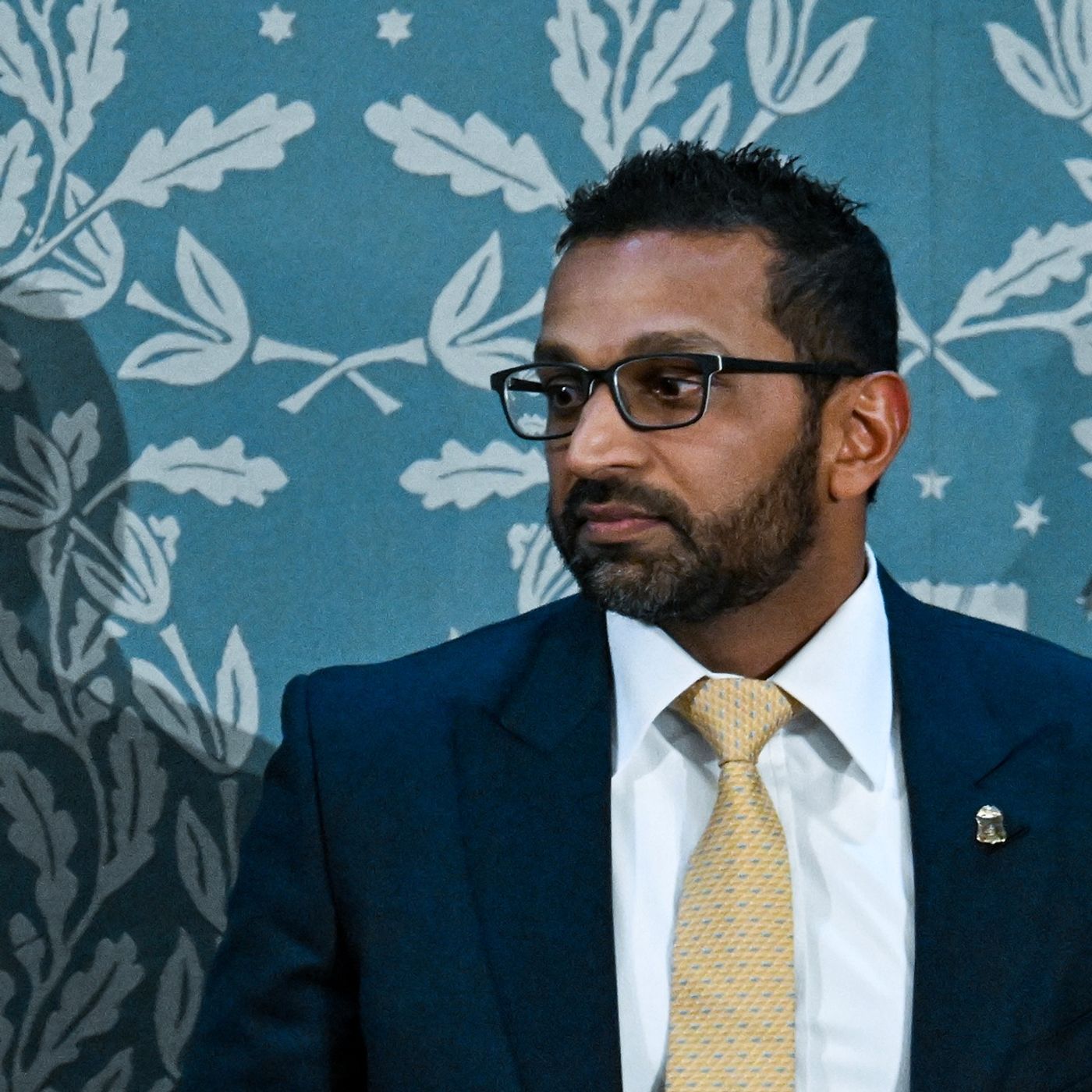
Photo: Kenny Holston/The New York Times
For more information on today’s episode, visit nytimes.com/thedaily. Transcripts of each episode will be made available by the next workday.
Subscribe today at nytimes.com/podcasts or on Apple Podcasts and Spotify. You can also subscribe via your favorite podcast app here https://www.nytimes.com/activate-access/audio?source=podcatcher. For more podcasts and narrated articles, download The New York Times app at nytimes.com/app.
Hosted by Simplecast, an AdsWizz company. See pcm.adswizz.com for information about our collection and use of personal data for advertising.