
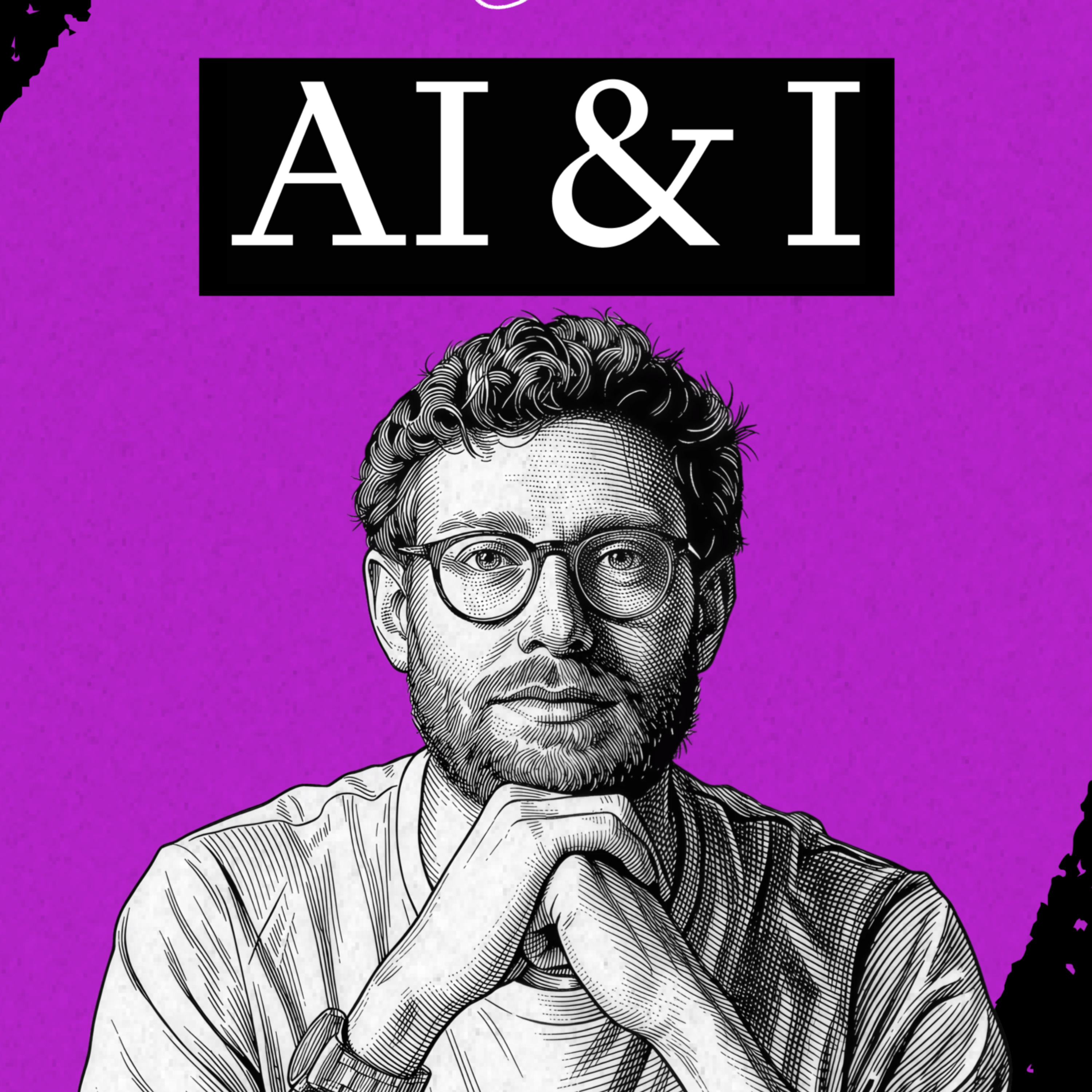
Why the Next Hit AI Product Will Be Social Why the Next Hit AI Product Will Be Social (Best of the Pod)

🤖 AI Summary
Overview
This episode explores the evolution of consumer AI, focusing on the shift from technical to product-driven innovation. Sarah Tavel, a partner at Benchmark and early Pinterest employee, discusses why the next wave of AI products will likely be social, emphasizing multiplayer dynamics, network effects, and status-driven communities. The conversation also delves into venture capital strategies, the challenges of identifying real network effects, and the future of AI in reshaping industries like finance and venture capital itself.
Notable Quotes
- Someone's going to create a UGC-type community where people who are really, really good make it so much easier for the rest of us to take advantage of this technology.
– Sarah Tavel, on the untapped potential of social AI.
- You're going to be the average of the five AIs you spend the most time with.
– Dan Shipper, on the personal and professional impact of AI companions.
- I’m drawn to founders for whom building their company is an affliction—it’s a rash they just have to scratch.
– Sarah Tavel, on identifying exceptional entrepreneurs.
🧠 The Evolution of Consumer AI
- Sarah Tavel outlines the historical shift in tech leadership from deeply technical founders (e.g., Google) to product-focused visionaries (e.g., Pinterest, Instagram).
- She compares ChatGPT to early Google, noting that both are highly technical products with simple user interfaces. However, she argues that AI is still in its technical founder
phase, awaiting product-driven innovation.
- The next wave of AI products will likely focus on user experience, social dynamics, and multiplayer interactions, moving beyond the single-player mode
of current tools like ChatGPT.
🌐 Why Social DNA is the Future of AI
- Tavel critiques ChatGPT's lack of social features, calling its custom GPTs criminally underdeveloped
for community use.
- She predicts the rise of AI platforms with user-generated content (UGC) and status-driven communities, where users can share and learn from each other's AI interactions.
- Multiplayer dynamics, such as network effects and status-seeking behaviors, will be key to unlocking the next big consumer AI product.
- Examples include AI companions for personal use and platforms that democratize advanced AI usage through shared prompts and expertise.
📈 Identifying Real Network Effects
- Tavel explains that many startups claim to have network effects but fail to demonstrate true accelerants in their business models.
- Early evidence of network effects often appears in niche markets or white-hot centers
of demand, as seen in companies like Agentio, a marketplace for YouTube creators and brands.
- She emphasizes the importance of frictionless flywheels and warns against superficial claims of network effects in pitch decks.
💡 Investing in the AI Hype Cycle
- Tavel shares her approach to investing during hype cycles, focusing on teams with unlimited potential
rather than chasing inflated valuations.
- She looks for founders who think deeply about strategy, network effects, and escaping competition.
- The best founders are learning machines
who prioritize the company’s success over personal ego and are relentless in overcoming challenges.
💸 Beyond AI: Stablecoins and Financial Innovation
- Tavel highlights her interest in stablecoins, particularly their potential to democratize access to the U.S. dollar in high-inflation countries like Argentina.
- She explains how stablecoins reduce friction in global transactions, enabling peer-to-peer payments and fostering liquidity in underserved markets.
- The network effects of stablecoins, such as Tether and USDC, stem from their widespread adoption and integration into financial ecosystems.
AI-generated content may not be accurate or complete and should not be relied upon as a sole source of truth.
📋 Episode Description
Most consumer AI so far has been single-player: you and a chatbot, alone.
Benchmark partner Sarah Tavel, one of Pinterest's first 30 employees, is betting that's about to change. She's looking for a product genius who can build an AI product with social DNA: status, network effects, and multiplayer dynamics. That'll enable users of ChatGPT and other models to learn from how others use AI and level up.
On this week’s AI & I, Dan Shipper revisits his conversation with Sarah. They talk about why technical founders dominate the early days of a platform shift while product-minded founders win later, what ChatGPT is still missing, and what separates a founder's real network effect from a slide with a flywheel diagram.
If you found this episode interesting, please like, subscribe, comment, and share!
To hear more from Dan Shipper:
Subscribe to Every: https://every.to/subscribe
Follow him on X: https://twitter.com/danshipper
Timestamps for YouTube:
0:00 Start
1:10 Introduction
2:26 Why the future of consumer AI belongs to founders with product intuition
11:09 What Sarah sees as ChatGPT's biggest weakness
18:45 How Sarah would design a consumer AI app with social DNA
24:10 The kind of founders Sarah invests in
28:33 How to know if your startup's network effects are real
35:40 What's catching Sarah's eye beyond AI
40:41 How AI will change the way top venture capitalists invest
Links to resources mentioned in the episode:
Sarah Tavel on X: https://x.com/sarahtavel
Benchmark: https://benchmark.com
Agentio (marketplace for YouTube creators and brands): https://agentio.com/
Chainalysis: https://chainalysis.com
The Five Temptations of a CEO by Patrick Lencioni: https://www.amazon.com/dp/B007BZBRB8
Thinking in Bets by Annie Duke: https://www.amazon.com/dp/B0HBBW23PM