

🤖 AI Summary
Overview
This episode delves into the aftermath of Nicolás Maduro's removal as Venezuela's leader, exploring the Trump administration's decision to back Delcy Rodríguez, a Maduro loyalist, over opposition leader María Corina Machado. It examines the political, economic, and social implications of this decision, as well as the reactions of Venezuelans navigating an uncertain future.
Notable Quotes
- This is not the outcome they would have chosen. It’s not just, it’s not fair, but it just might make their difficult life a little bit easier.
– Anatoly Kermanaev, on Venezuelans' tempered expectations post-Maduro.
- Economic freedoms do not always correlate with political freedoms.
– Anatoly Kermanaev, reflecting on the paradox of Venezuela's current political and economic landscape.
- Trump saw the ongoing dancing as a humiliation, as Maduro calling his bluff.
– Anatoly Kermanaev, on the symbolic breaking point in U.S.-Venezuela relations.
🇻🇪 The Night of Maduro’s Fall
- Carolina Hill recounts the chaos of January 3rd, with explosions, shaking buildings, and the eerie sound of helicopters, as many Venezuelans believed the U.S. was liberating them.
- Juan describes the emotional rollercoaster of hope and relief, believing the dictatorship was finally over.
- Despite Maduro's removal, John Rodriguez and others express confusion and fear about what comes next, as much of the regime remains intact.
🤝 Trump’s Surprising Alliance with Delcy Rodríguez
- The Trump administration chose Delcy Rodríguez, Maduro’s vice president, over opposition leader María Corina Machado, prioritizing continuity and economic stability.
- Delcy’s reputation as a capable economic manager who stabilized Venezuela’s economy during a crisis made her appealing to U.S. interests, particularly for oil and investment.
- Machado’s uncompromising stance against negotiation and her inability to adapt to Trump’s transactional politics alienated her from both the U.S. and Venezuelan elites.
⚖️ The Paradox of Leadership and Popularity
- Machado, despite her broad popular support and conservative credentials, lost favor with elites and the military due to her rigid principles and anti-government rhetoric.
- Delcy, with limited public support, gained the backing of business elites and the Trump administration by fostering a deregulated, capitalist economy.
- This dynamic highlights the tension between political ideals and pragmatic governance in Venezuela.
💡 The Hollowing of Chavismo
- The Chavista movement, once rooted in socialism and anti-American nationalism, has been reduced to a survivalist regime focused on maintaining power.
- The lack of resistance to Maduro’s removal and Delcy’s willingness to cooperate with the U.S. reveal the erosion of the movement’s ideological foundations.
- Venezuelans remain skeptical, viewing the new leadership as a continuation of the old regime under a different guise.
🌍 Venezuelans’ Mixed Reactions to a Post-Maduro Era
- Many Venezuelans feel disillusioned, as the removal of Maduro has not led to the sweeping change they hoped for.
- The U.S.’s heavy involvement in shaping Venezuela’s future adds to the uncertainty, with citizens wary of foreign influence.
- While some see Delcy’s leadership as a potential path to stability, others lament the missed opportunity for true political liberation.
AI-generated content may not be accurate or complete and should not be relied upon as a sole source of truth.
📋 Episode Description
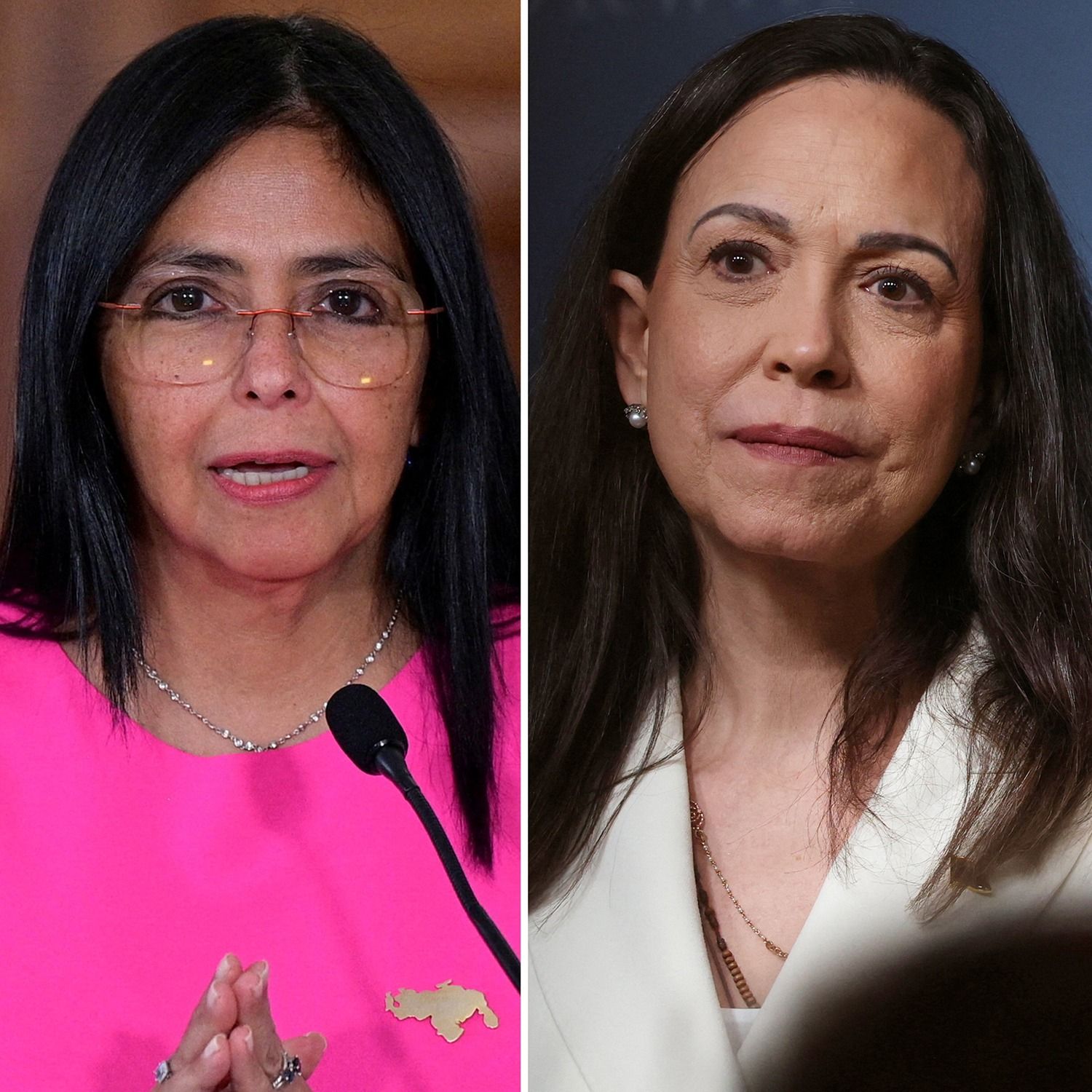
On Monday, President Trump picked Vice President Delcy Rodríguez of Venezuela, now the interim leader, to continue to preside over the country instead of María Corina Machado, the opposition leader.
Anatoly Kurmanaev, who reports on Venezuela, explains why Mr. Trump chose a Maduro loyalist to run the country. And Venezuelan citizens reflect on the realities of a post-Maduro era.
Guest: Anatoly Kurmanaev, a reporter for The New York Times who covers Venezuela.
Background reading:
- How Mr. Trump fixed on a Maduro loyalist as Venezuela’s new leader.
- Why he refused to back Ms. Machado.
Photo: From left, Gaby Oraa/Reuters; Leonhard Foeger, via Reuters
For more information on today’s episode, visit nytimes.com/thedaily. Transcripts of each episode will be made available by the next workday.
Subscribe today at nytimes.com/podcasts or on Apple Podcasts and Spotify. You can also subscribe via your favorite podcast app here https://www.nytimes.com/activate-access/audio?source=podcatcher. For more podcasts and narrated articles, download The New York Times app at nytimes.com/app.