

🤖 AI Summary
Overview
This episode explores the unprecedented $10 billion midterm ad war, dissecting the strategies and narratives employed by Democrats and Republicans in their campaign advertising. Shane Goldmacher, a national political correspondent, provides insights into how these ads reflect each party's priorities, vulnerabilities, and attempts to sway voters in a polarized political climate.
Notable Quotes
- Campaign ads are an x-ray that doesn’t lie about what campaigns are hopeful of and worried about.
– Shane Goldmacher, on the revealing nature of political advertising.
- Everyone presumes everyone’s corrupt, but these people’s corruption is actually costing you money.
– Shane Goldmacher, on Democrats’ messaging strategy.
- Think of this as a choice election. If it’s an up or down on the Republicans, it’s a down.
– Shane Goldmacher, summarizing the Republican strategy.
🛠️ The Mechanics of Campaign Ads
- Shane Goldmacher explains that campaign ads are the primary tool for candidates to communicate with disengaged voters, often during moments of distraction like watching TV or browsing online.
- Ads are a distillation of a campaign’s core message, revealing what candidates believe will resonate most with voters.
- The tone and content of ads evolve over time, often becoming more negative as campaigns grow desperate.
📉 Democrats’ Strategy: Linking Republicans to Trump and Economic Woes
- Democrats are focusing on tying Republicans to Donald Trump, particularly in areas where his popularity has waned.
- Ads highlight Trump’s unfulfilled promises, such as economic relief and avoiding new wars, while blaming him for inflation, high gas prices, and the war in Iran.
- A recurring theme is corruption, with Democrats accusing Republicans of prioritizing elite interests over ordinary Americans, such as linking GOP candidates to rising drug prices or corporate greed.
- In swing states, Democrats are running ads that avoid overt partisanship, presenting their candidates as moderate and bipartisan to appeal to disillusioned Republican voters.
📣 Republicans’ Strategy: Defend, Distance, and Attack
- Republicans are emphasizing their legislative accomplishments, such as tax cuts and economic policies, while blaming Democrats for rising costs.
- In areas where Trump is unpopular, some Republicans are distancing themselves from him, running ads that highlight their bipartisan efforts.
- A significant portion of Republican ads focuses on attacking Democrats as too liberal
or too extreme,
often using cultural issues like transgender rights or crime to paint them as out of touch with mainstream values.
💥 The Role of Negative and Controversial Ads
- Both parties are deploying increasingly personal and negative ads as Election Day nears.
- A particularly controversial ad in Ohio featured the estranged mother of a Democratic candidate accusing her daughter of dishonesty, sparking backlash even within the Republican Party.
- Democrats are also using ads to exploit Republican vulnerabilities, such as linking candidates to Jeffrey Epstein to sow disillusionment among GOP voters.
📊 The Battle for the Narrative
- Democrats have an advantage as the party out of power, leveraging voter dissatisfaction with the current administration to amplify their message.
- Republicans face a tougher challenge, needing to defend their record while shifting focus to perceived Democratic extremism.
- Both parties are crafting their ads to reflect broader narratives, with Democrats focusing on economic struggles and corruption, and Republicans emphasizing cultural issues and attacking their opponents.
AI-generated content may not be accurate or complete and should not be relied upon as a sole source of truth.
📋 Episode Description
The midterms are shaping up to be the most expensive election cycle in history as campaigns pour huge sums into the ads voters see virtually everywhere.
Today, Shane Goldmacher, a national political correspondent for The New York Times, breaks down how Democrats are tying Republicans to President Trump, inflation and corruption, while Republicans are trying to paint Democrats as too liberal. He also weighs in on what those competing messages reveal about each party’s hopes, vulnerabilities and strategy as Election Day nears.
Guest: Shane Goldmacher, a national political correspondent for The New York Times.
Background reading:
- Mr. Trump has wielded an unprecedented $277 million in the final stretch of the midterms.
- Both parties are spending enormous amounts of money to try to win whatever votes are left for the taking before Election Day.
- Mr. Trump’s super PAC is flooding Facebook and Instagram with targeted ads as it seeks to turn out Republicans amid the president’s historically low approval ratings.
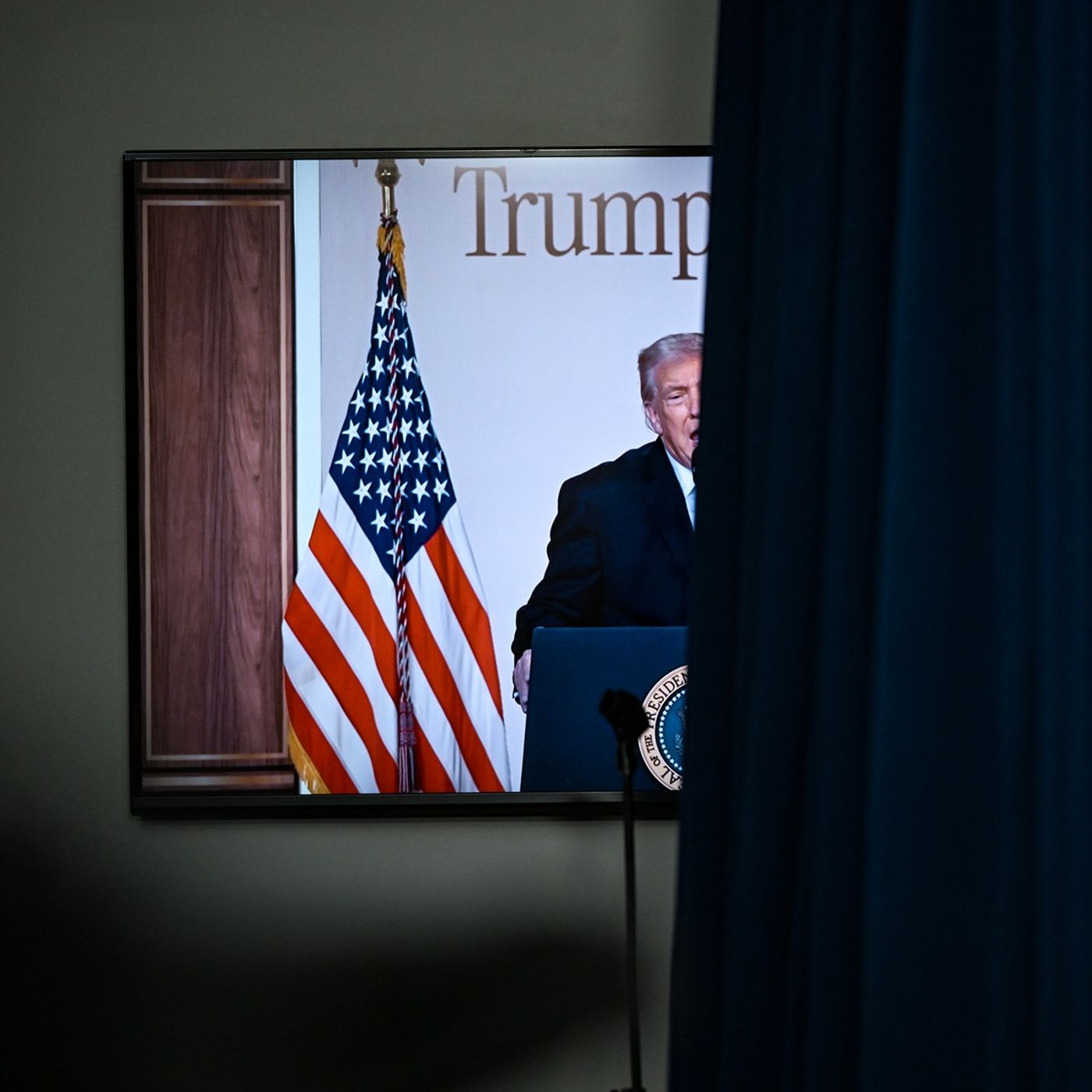
Photo: Kenny Holston/The New York Times
For more information on today’s episode, visit nytimes.com/thedaily. Transcripts of each episode will be made available by the next workday.
For more information on today’s episode, visit nytimes.com/thedaily. Transcripts of each episode will be made available by the next workday.
Subscribe today at nytimes.com/podcasts or on Apple Podcasts, Spotify and Amazon Music. You can also subscribe via your favorite podcast app here https://www.nytimes.com/activate-access/audio?source=podcatcher. For more podcasts and narrated articles, download The New York Times app at nytimes.com/app.
Hosted by Simplecast, an AdsWizz company. See pcm.adswizz.com for information about our collection and use of personal data for advertising.