

🤖 AI Summary
Overview
This episode explores the Democratic Party's promises to tackle affordability issues following their midterm election victories. Experts from The New York Times discuss the feasibility of addressing high gas prices, healthcare costs, housing shortages, and broader economic challenges under a divided government.
Notable Quotes
- We could be living in a world where prices at the pump stay elevated for some time.
– Rebecca Elliott, on the complexities of reducing gas prices.
- Raising the federal minimum wage to $15 an hour would give an immediate raise to something like 9 million American workers.
– Ben Casselman, on the potential impact of a higher minimum wage.
- It seems extremely difficult to imagine something as ambitious as Medicare for All really getting very far with this president.
– Margot Sanger-Katz, on the challenges of passing transformative healthcare reforms.
⛽ Tackling High Gas Prices
- Rebecca Elliott explains that Congress has limited tools to lower gas prices, as they are influenced by global markets and geopolitical factors like the war in the Middle East.
- Options like suspending the federal gas tax or restricting fuel exports could provide short-term relief but risk long-term price increases.
- Domestic energy independence has mitigated shortages but hasn’t insulated Americans from global price fluctuations.
💊 Addressing Healthcare Costs
- Margot Sanger-Katz highlights key Democratic priorities: restoring Obamacare subsidies and reversing Medicaid cuts, which could impact millions of Americans.
- Democrats may use budget reconciliation to bypass Senate filibusters, but President Trump is likely to veto any legislation that undermines his administration’s policies.
- Bipartisan efforts, such as capping insulin costs at $35/month, may have a better chance of success. However, sweeping reforms like Medicare for All are unlikely under the current administration.
🏠 The Housing Affordability Crisis
- Ben Casselman identifies housing as a long-standing affordability issue, exacerbated by a lack of supply in high-demand areas.
- While Congress passed significant housing legislation recently, it’s insufficient to address the broader crisis.
- Local opposition to new construction and zoning restrictions remain major barriers to increasing housing supply.
📉 Tariffs and Economic Relief
- Tariffs imposed during the Trump administration have contributed to higher consumer prices. Democrats may seek to roll back tariffs on Canada, which have hurt American industries and border communities.
- However, Ben Casselman notes that removing tariffs is unlikely to significantly lower prices due to companies’ reluctance to reduce costs quickly.
🤖 AI and Its Economic Impact
- The rapid expansion of AI and data centers has driven up construction costs and electricity prices, contributing to inflation.
- Some Democrats are pushing for moratoriums on data center construction and legislation requiring these facilities to bear more of the infrastructure costs.
- Ben Casselman suggests that slowing the AI boom could stabilize the economy without derailing its benefits, though this remains a contentious issue.
AI-generated content may not be accurate or complete and should not be relied upon as a sole source of truth.
📋 Episode Description
The Democratic Party swept the midterm elections by making big promises to Americans about bringing down the high cost of living. But when they take control of Congress in January, they will face a president who can veto anything they put forward.
The New York Times reporters Rebecca F. Elliot, Margot Sanger-Katz and Ben Casselman each discuss what, if anything, Democrats can really do to fix the key problems that propelled them into office.
Guest:
- Rebecca F. Elliott, an energy reporter for The New York Times.
- Margot Sanger-Katz, a reporter on health care policy and government spending for The New York Times.
- Ben Casselman, the chief economics correspondent for The New York Times.
Background reading:
- A top Democrat is eyeing a filibuster-proof bill to unlock the affordability agenda.
- Could the voter backlash against A.I. help the economy?
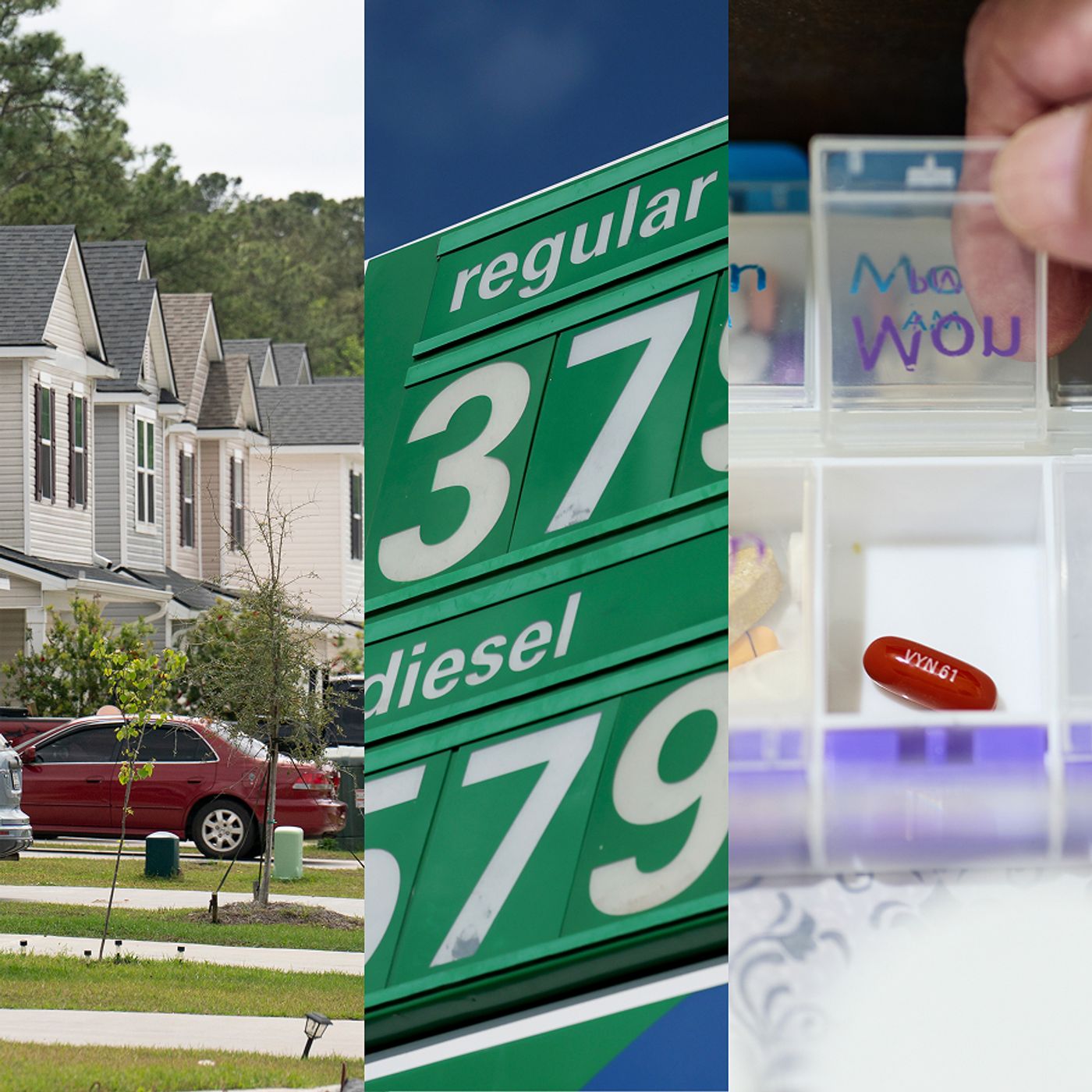
Photo: Sean Rayford for The New York Times, Joe Raedle/Getty Images, Melyssa St. Michael for The New York Times
For more information on today’s episode, visit nytimes.com/thedaily. Transcripts of each episode will be made available by the next workday.
For more information on today’s episode, visit nytimes.com/thedaily. Transcripts of each episode will be made available by the next workday.
Subscribe today at nytimes.com/podcasts or on Apple Podcasts, Spotify and Amazon Music. You can also subscribe via your favorite podcast app here https://www.nytimes.com/activate-access/audio?source=podcatcher. For more podcasts and narrated articles, download The New York Times app at nytimes.com/app.
Hosted by Simplecast, an AdsWizz company. See pcm.adswizz.com for information about our collection and use of personal data for advertising.