

🤖 AI Summary
Overview
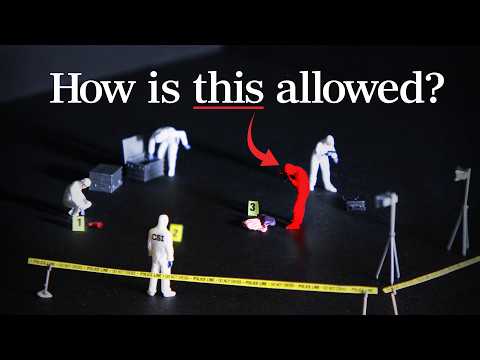
This episode explores the reliability of forensic techniques used in criminal investigations, from hair analysis to DNA evidence. It highlights the historical development, scientific scrutiny, and potential flaws in these methods, emphasizing the need for forensic science to evolve and adhere to rigorous standards.
Notable Quotes
- DNA can never be taken out of context.
– Professor Turi King, on the limitations of DNA evidence.
- Leave the forensic examiners alone. Give them independence of mind to make decisions based on the relevant scientific evidence.
– Dr. Itiel Dror, on the dangers of bias in forensic analysis.
- Bite mark transfer to skin is not reliable. Skin is soft, squishy, and distorts under pressure.
– Dr. Mary Bush, on the unreliability of bite mark evidence.
🧬 The Evolution and Flaws of Forensic Techniques
- The first recorded forensic investigation, described in Song Ci's 1247 book The Washing Away of Wrongs, relied on flies landing on a murder weapon. This anecdote underscores how far forensic science has come—and how much further it needs to go.
- Hair analysis, once a cornerstone of forensic evidence, was debunked when DNA testing revealed that 96% of FBI hair analysis cases were false. In some instances, human hair was mistaken for dog hair.
- Bite mark analysis, used in thousands of cases since the 1950s, has been proven unreliable due to the distortion of skin under pressure. Despite this, it remains admissible in courts worldwide.
🩸 Bloodstain Pattern Analysis: A Flawed Foundation
- Bloodstain analysis, popularized in the 1970s, uses trigonometry to trace blood spatter origins. However, early methods ignored critical factors like gravity and drag, leading to inaccurate conclusions.
- A 2021 study found that analysts disagreed on bloodstain interpretations 8% of the time, highlighting the subjective nature of this technique.
- Modern software incorporating fluid dynamics has improved accuracy, but the field still struggles with foundational flaws.
🛑 Fingerprint Analysis: The Myth of Certainty
- Fingerprints, long considered infallible, are prone to human error and bias. In one case, Brandon Mayfield was falsely accused of terrorism due to a fingerprint match later proven incorrect.
- The process relies on identifying minutiae
points, but different examiners often identify varying numbers of these points, leading to inconsistent results.
- Contextual bias, such as knowing a suspect's criminal history, can influence examiners' conclusions.
🔬 DNA Evidence: A Double-Edged Sword
- DNA analysis is powerful but not infallible. Increasing sensitivity has led to issues like touch DNA,
where trace amounts can falsely implicate individuals.
- DNA mixtures, containing profiles from multiple individuals, are particularly error-prone. A 2013 study found that 69% of labs misinterpreted a controlled DNA mixture.
- Ethical concerns arise with full-genome sequencing, as it reveals personal traits like ethnicity, potentially introducing bias into investigations.
⚖️ The Need for Scientific Rigor in Forensics
- Many forensic methods, including bite marks and bloodstain analysis, were adopted without rigorous scientific validation.
- Experts like Dr. Itiel Dror and Professor Turi King advocate for independence and stricter guidelines to reduce bias and improve reliability.
- Forensic science must continue evolving, prioritizing accuracy and ethical considerations to ensure justice.
AI-generated content may not be accurate or complete and should not be relied upon as a sole source of truth.
📋 Video Description
How accurate is modern forensics? Sponsored by Saily - Get an exclusive 15% discount on Saily data plans! Use code veritasium at checkout. Download the Saily app or go to https://saily.com/veritasium
Last year, we launched the Elements of Truth game on Kickstarter and were thrilled by the response. We’re now in the final stages of production, with Kickstarter rewards shipping soon. If you missed the campaign, you can now pre-order the retail edition through our new website here - https://ve42.co/ForensicsDes
If you backed us on Kickstarter, don’t worry, your game will ship before any pre-orders are fulfilled.
If you’re looking for a molecular modelling kit, try Snatoms, a kit I invented where the atoms snap together magnetically - https://ve42.co/SnatomsV
For the latest science news, and for an exclusive bonus Q&A with the director of this video, sign up to the Veritasium newsletter - https://ve42.co/Newsletter
For early access to work-in-progress videos, join our Patreon https://ve42.co/VePatreon
Correction: At 2:47, we state 96% of cases were declared false, the FBI report found that examiners gave erroneous or exaggerated testimony under oath in 96% of those cases.
▀▀▀
0:00 The First Forensics Investigation
1:51 How accurate is hair in forensics?
3:30 Why Bite Marks Should Never Be Used In Court
5:22 Blood Spatter Analysis
8:04 How unique are fingerprints?
16:33 Is DNA evidence reliable?
21:38 How can we improve forensics as a science?
▀▀▀
Special thanks to the experts and collaborators who made this video possible:
For their fantastic insights and time in contributing to this video (in order of appearance) - Dr Mary Bush from the University at Buffalo, John Foster at the University of Greenwich, Dr Itiel Dror, and Professor Turi King.
For key expertise and consultation on the animations as well as wider research, Professor Denise Syndercombe Court of King’s College London and Dr John Butler of the National Institute for Standards and Technology.
For their expert contributions to the development and research of the video (in alphabetical order), Zack Kowalske (@TheScienceDetective), Dr Emmanuel Nsiah Amoako, Professor Nick Scurich, Derek Tremain, Dr Sophie Turfus, Theron Vines, Professor Graham Williams and Jerri Williams.
For key inspiration in the making of this video, Forensics: The Anatomy of Crime by Val McDermid, Patented: History of Inventions Podcast by History Hit, Murder Is Her Hobby: Frances Glessner Lee and The Nutshell Studies of Unexplained Death Exhibition at the Smithsonian American Art Museum, deathindiorama.com, and @forensicsprof videos on the Henry Classification System for fingerprint analysis.
▀▀▀
Reference List: https://ve42.co/ForensicsRefs
▀▀▀
Special thanks to our Patreon supporters:
Adam Foreman, Albert Wenger, Alex Porter, Alexander Tamas, André Powell, Anton Ragin, Balkrishna Heroor, Bertrand Serlet, Blake Byers, Bruce, Bryan Ackermann, Chris Brewer, Data Don, Dave Kircher, David Johnston, David Tseng, EJ Alexandra, Evgeny Skvortsov, Garrett Mueller, Gnare, gpoly, Hayden Christensen, Hong Thai Le, Ibby Hadeed, Jeromy Johnson, Jesse Brandsoy, Juan Benet, Kelcey Steele, KeyWestr, Kyi, Lee Redden, Marinus Kuivenhoven, Mark Heising, Martin Paull, Meekay, meg noah, Michael Krugman, Moebiusol - Cristian, Orlando Bassotto, Parsee Health, Paul Peijzel, Richard Sundvall, Robson, Sam Lutfi, Shalva Bukia, Sinan Taifour, Tj Steyn, Ubiquity Ventures, Vahe Andonians, wolfee
▀▀▀
Writers: Sarah Houlton and Gregor Čavlović
Producer and Director: Sarah Houlton
Presenter: Gregor Čavlović
Editors: Trenton Oliver and Axel Oliver
Assistant Editors: James Stuart and Peter Nelson
Animators: Emma Wright, Domonkos Józsa, Alex Drakoulis, Andrew Neet and Fabio Albertelli
Illustrator: Jakub Misiek
Researchers: Sophia Rose and Gabe Strong
Director of Photography: Richard Ing
Camera Assistant: Jack Stevenson
Additional Camera: Sarah Houlton
Additional Writer: Sophia Rose
Thumbnail Designers: Abdallah Rabah, Daniel Ellacott, Patryk Ziolkowski and Ben Powell
Production Team: Jess Bishop-Laggett, Glen Griffiths, Matthew Cavanagh, Anna Milkovic and Justin St Laurent
Executive Producers: Gregor Čavlović and Casper Mebius
Additional video/photos supplied by Getty Images and Storyblocks
Music from Epidemic Sound