

🤖 AI Summary
Overview
This episode explores the Trump administration's new policies on federal student loans, which aim to reduce borrowing limits and tie loan availability to program outcomes. These changes could reshape higher education by addressing the rising costs of college and the growing student debt crisis. Ron Lieber, a personal finance columnist, provides insights into the implications of these policies for students, families, and universities.
Notable Quotes
- If you're not earning more than a high school graduate does on average, what has the school done for you?
— Ron Lieber, on the rationale behind the new earnings test for federal loan eligibility.
- It may seem counterintuitive to fix the problem of higher education being too costly by giving families less in federal loans, but the idea is to provide guardrails to prevent overextending.
— Ron Lieber, on the logic behind loan caps.
- Everybody shopping for higher education deserves way better answers and way more data about why this costs more than that competing institution down the street.
— Ron Lieber, advocating for transparency in higher education pricing.
🎓 Federal Loan Caps and Their Impact
- New caps limit borrowing for parents to $20,000 annually and $65,000 total, while graduate students face limits of $20,500 annually and $100,000 total for non-professional programs. Professional programs like law or medical school have higher caps of $50,000 annually and $200,000 total.
- These caps aim to prevent families from over-borrowing, but critics argue they could disproportionately affect low-income students who may struggle to secure private loans.
- Universities may be forced to lower tuition or increase financial aid to adapt to reduced borrowing capacity.
📊 Earnings Test for Loan Eligibility
- Federal loans will no longer be available for programs whose graduates earn less than the average high school graduate in their state four years after graduation.
- This policy applies to both undergraduate and graduate programs, with stricter benchmarks for advanced degrees.
- Programs in fields like fine arts and religion are at risk of losing federal loan eligibility, potentially leading to their closure or restructuring.
💰 The History of Student Loan Expansion
- Federal student loans began in the 1980s to help families cover modest tuition costs but expanded significantly in the 2000s to include graduate programs.
- The lack of borrowing limits and underwriting fueled a surge in student debt, now exceeding $1.7 trillion.
- Past attempts to impose stricter loan policies, such as during the Obama administration, faced backlash and were partially reversed.
📈 The Rise of Master's Programs
- Universities have increasingly relied on lucrative master's programs, many of which promise career advancement but fail to deliver significant earnings growth.
- Some institutions have exploited federal loan programs and public service loan forgiveness to attract students, often leaving them with unmanageable debt.
- The proliferation of master's programs—14,000 new ones in two decades—has raised questions about their value and the ethics of their marketing.
🔍 Transparency and Accountability in Higher Education
- The new policies could prompt students and families to demand clearer data on program costs, outcomes, and value.
- Universities have largely avoided accountability for alumni earnings, framing borrowing as a personal choice rather than an institutional responsibility.
- Ron Lieber emphasizes the need for better consumer education and honest conversations about the return on investment in higher education.
AI-generated content may not be accurate or complete and should not be relied upon as a sole source of truth.
📋 Episode Description
As the cost of higher education has soared in recent decades, universities have attracted more scrutiny about the value of a four-year degree.
Now, the Trump administration is taking those questions to the next level with a set of policies that scales back the federal government’s student loan program.
Ron Lieber, who writes about personal finance for The New York Times, explains what the new changes are, and how they might reshape higher education in America.
Guest: Ron Lieber, the Your Money columnist for The New York Times, writes about everything from retirement savings and college tuition to credit reports and taxes.
Background reading:
- Parents and graduate students have new loan limits. Who will fill the gap?
- What the new loan caps will mean for grad students this fall.
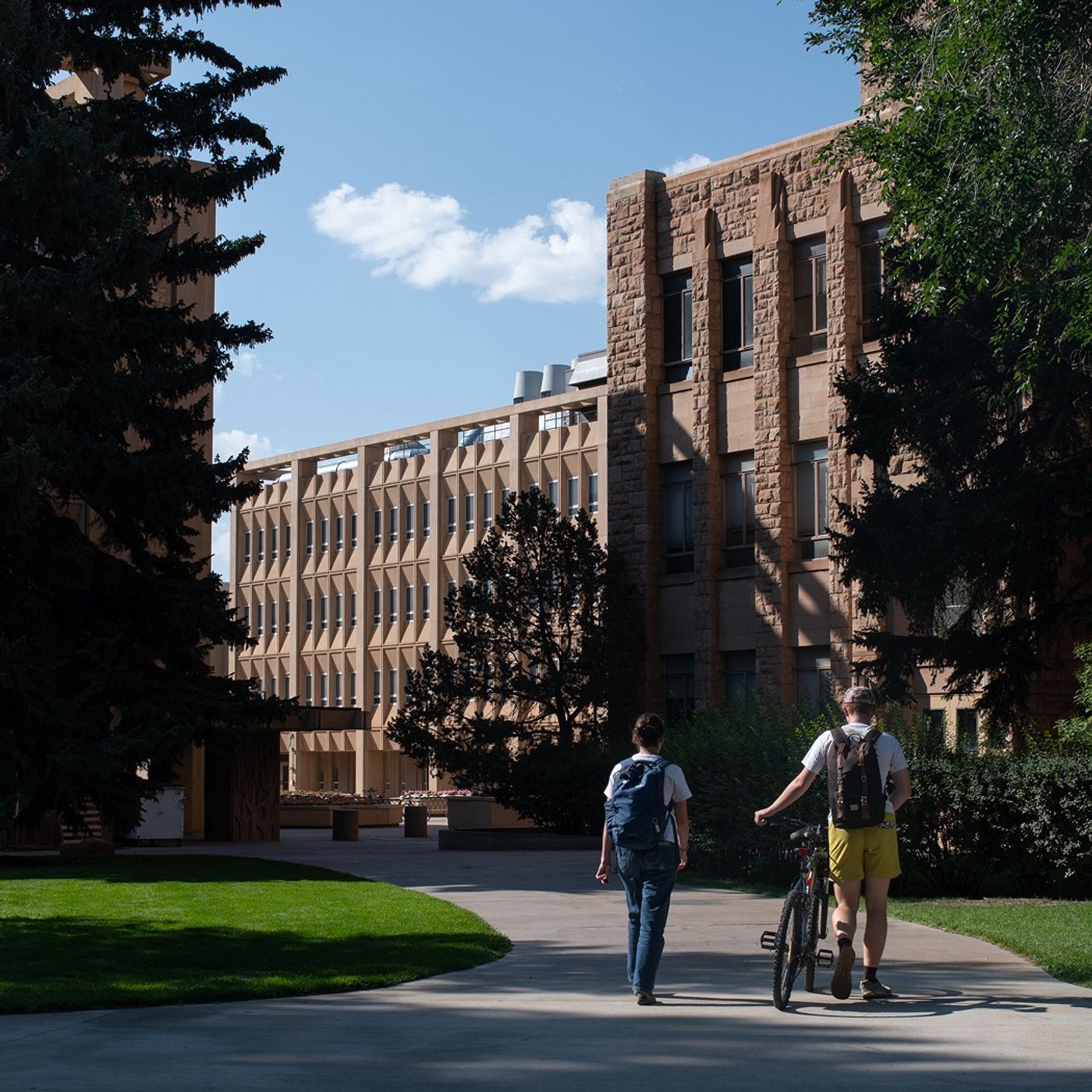
Photo: Rachel Woolf for The New York Times
For more information on today’s episode, visit nytimes.com/thedaily. Transcripts of each episode will be made available by the next workday.
Subscribe today at nytimes.com/podcasts or on Apple Podcasts and Spotify. You can also subscribe via your favorite podcast app here https://www.nytimes.com/activate-access/audio?source=podcatcher. For more podcasts and narrated articles, download The New York Times app at nytimes.com/app.
Hosted by Simplecast, an AdsWizz company. See pcm.adswizz.com for information about our collection and use of personal data for advertising.