
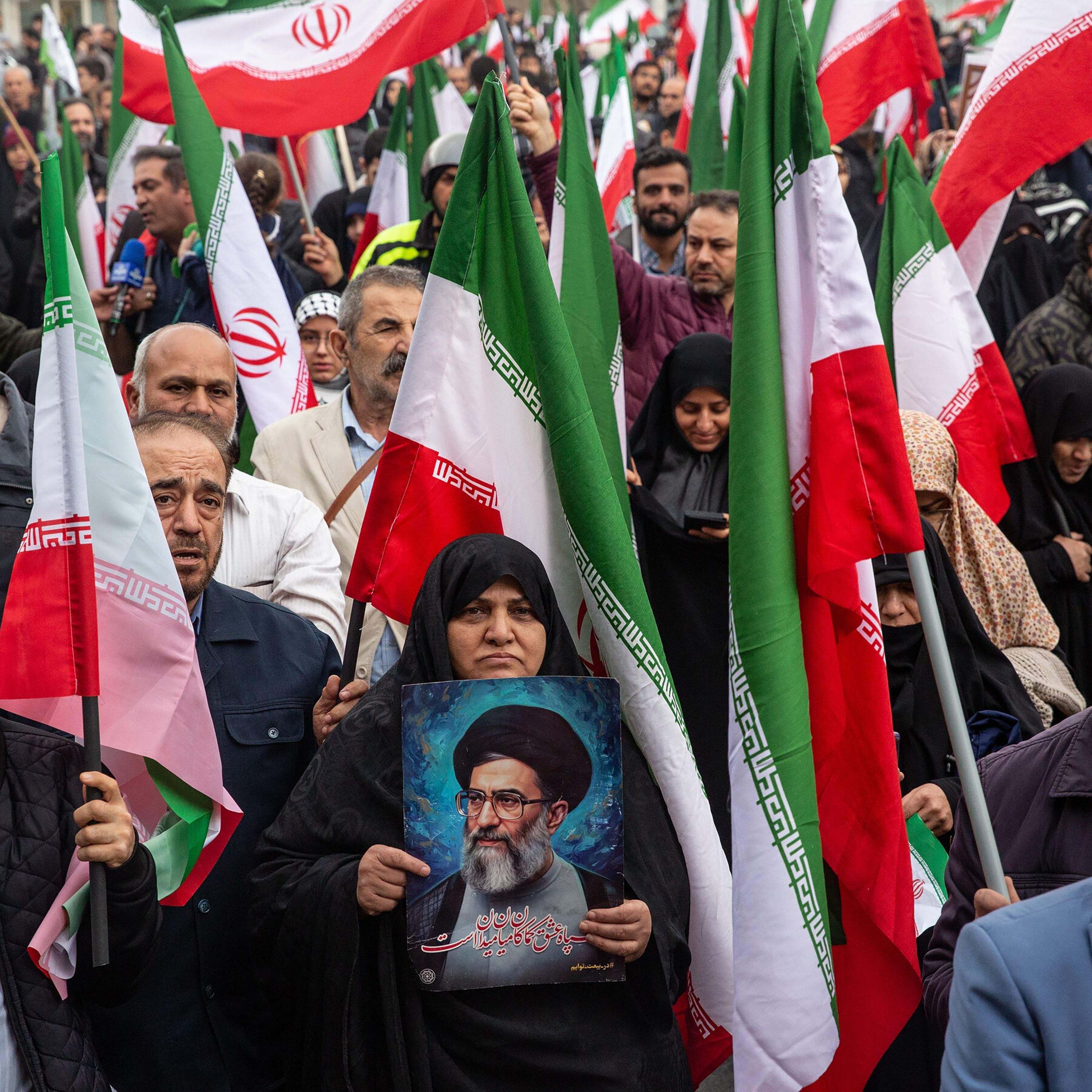
The Killing of Iran’s Supreme Leader and the End of an Era in the Middle East

🤖 AI Summary
Overview
This episode delves into the unprecedented U.S.-Israeli military operation that resulted in the killing of Iran's Supreme Leader Ayatollah Ali Khamenei and other top Iranian officials. Journalists Mark Mazzetti and David E. Sanger analyze the motivations behind the attack, its immediate aftermath, and the potential geopolitical consequences for the Middle East and beyond.
Notable Quotes
- If that doesn't define a war, even one that may only last a few days, I don't know what does.
– David E. Sanger, on the scale of the U.S.-Israeli strikes on Iran.
- Now is the time to seize control of your destiny and to unleash the prosperous and glorious future that is close within your reach.
– Donald Trump, urging the Iranian people to rise up against their government.
- This is a historic moment... The Supreme Leader of Iran is the identity of a theocratic government that has existed for 47 years.
– Mark Mazzetti, on the significance of Ayatollah Khamenei's death.
🔥 The U.S.-Israeli Attack on Iran
- The U.S. and Israel launched a coordinated military assault targeting Iran's leadership, nuclear sites, and military infrastructure.
- The operation marked the most aggressive U.S. military action against Iran since the 1979 Iranian Revolution.
- Israel focused on eliminating Iran's senior leadership, including Ayatollah Khamenei, while the U.S. targeted military and nuclear facilities.
- Civilian casualties were reported, including a missile strike on a girl's school that killed 51 children.
📜 The Road to Conflict
- The buildup began after widespread protests in Iran in January, during which thousands of protesters were killed.
- Israeli Prime Minister Benjamin Netanyahu lobbied for a more ambitious military campaign, citing Iran's missile program as a threat.
- Diplomatic talks between the U.S. and Iran over nuclear enrichment failed, with Iran rejecting U.S. offers to supply uranium under strict controls.
- The Trump administration justified the attack with claims about imminent threats, though many of these claims were later debunked.
⚔️ Iran's Retaliation and Strategic Calculations
- Iran responded with missile and drone strikes targeting U.S. bases, allies in the region, and Israel.
- The response was measured, suggesting Iran may be conserving resources for future retaliation.
- Analysts speculate that Iran's military capabilities, including its ballistic missile arsenal, were significantly weakened in the initial strikes.
🌍 Geopolitical Implications and Risks
- The attack has raised concerns about a prolonged conflict in the Middle East, with potential for a power vacuum and civil war in Iran.
- European allies have expressed skepticism and concern, with some refusing to support the operation.
- The U.S. administration has emphasized that no ground troops will be deployed, aiming to avoid a prolonged forever war.
- Experts warn of potential long-term risks, including asymmetric warfare, cyberattacks, and regional instability.
🤔 The Future of Iran and U.S. Strategy
- President Trump has called on the Iranian people to seize the opportunity to overthrow their government, but experts question the feasibility of this strategy.
- The death of Ayatollah Khamenei could lead to a power struggle within Iran, with the potential for civil unrest or even civil war.
- The episode raises questions about the broader implications of the U.S.'s reliance on military force for regime change and its impact on global perceptions of American power.
AI-generated content may not be accurate or complete and should not be relied upon as a sole source of truth.
📋 Episode Description
The United States and Israel on Saturday launched an attack against Iran, killing the nation’s supreme leader, Ayatollah Ali Khamenei, and, according to Iranian state media, several people in the country’s leadership structure.
The New York Times journalists Mark Mazzetti and David E. Sanger explain what is next for Iran, and what these strikes threaten to unleash.
Guest:
- Mark Mazzetti, an investigative reporter for The New York Times based in Washington, D.C.
- David E. Sanger, the White House and National Security Correspondent for The New York Times.
Background reading:
- Here’s what to know about the U.S. attacks on Iran.
- Fact-checking President Trump’s justifications for attacking Iran.
Photo: Arash Khamooshi for The New York Times
For more information on today’s episode, visit nytimes.com/thedaily. Transcripts of each episode will be made available by the next workday.
Subscribe today at nytimes.com/podcasts or on Apple Podcasts and Spotify. You can also subscribe via your favorite podcast app here https://www.nytimes.com/activate-access/audio?source=podcatcher. For more podcasts and narrated articles, download The New York Times app at nytimes.com/app.
Hosted by Simplecast, an AdsWizz company. See pcm.adswizz.com for information about our collection and use of personal data for advertising.