

🤖 AI Summary
Overview
This episode explores the escalating violence in the West Bank, focusing on the personal story of Loui Ridi, a Palestinian-American whose home has become a flashpoint in the conflict. The discussion highlights the broader context of settler violence, the role of the Israeli military, and the emotional and cultural significance of land for Palestinians.
Notable Quotes
- Imagine that someone is attacking your family member, and you're watching it live from a distance.
– Loui Ridi, on the helplessness of witnessing the attacks on his home from the U.S.
- If they want to raise their flag, they have to take down the most powerful flag in the world, the American flag.
– Loui Ridi, on raising the U.S. flag on his house as a symbol of defiance.
- Why is it so hard to move 5 to 10 settlers? Just arrest them, prosecute them, and let us live in peace.
– Loui Ridi, questioning the lack of action from authorities.
🏠 The Encroachment of Settlers
- Loui Ridi describes how settlers began encroaching on his property in January, initially scouting the area and later vandalizing his home.
- Settlers damaged security systems, electricity panels, and gates, and eventually set up a tent outside his house.
- Despite calls to the Israeli police and military, no meaningful action was taken to stop the settlers.
🌍 The Emotional and Cultural Significance of Land
- For Loui, the land represents his family’s heritage, passed down through generations. He recalls finding a rock on his father’s land and imagining its connection to his ancestors.
- The house, built as a retirement home, was meant to preserve his family’s connection to their roots and Palestinian culture.
- Loui emphasizes that the fight is not just about a house but about resisting the erasure of Palestinian presence in the region.
🛡️ The Role of the Israeli Military
- The Israeli Defense Forces (IDF) declared Loui’s property a closed military zone,
restricting his family’s movement while settlers roamed freely.
- Loui recounts an incident where soldiers socialized with settlers instead of removing them, further eroding his trust in the authorities.
- Despite U.S. Ambassador Mike Huckabee’s condemnation of the settlers as terrorists,
Loui feels that international pressure has not translated into meaningful action on the ground.
✈️ A Return to Protect His Home
- Watching the attacks unfold from Ohio, Loui decided to return to the West Bank to protect his family and property.
- He raised an American flag on his house as a symbolic act of resistance, knowing it might deter settlers or draw international attention.
- His presence has not resolved the situation, as both settlers and the IDF continue to restrict his family’s freedom and safety.
⚖️ The Broader Context of Settler Violence
- The episode highlights a sharp increase in settler violence, with over 1,000 Palestinians injured and more than 20 killed this year alone.
- Settlers often act with impunity, bolstered by support from the Israeli government.
- Israeli Prime Minister Benjamin Netanyahu recently condemned such attacks, but Loui and others remain skeptical about meaningful change.
AI-generated content may not be accurate or complete and should not be relied upon as a sole source of truth.
📋 Episode Description
Over the past year, there has been an increase in violence in the West Bank. Israeli settles have terrorized Palestinians, set fire to their property, uprooted their olive groves and stolen their animals in an effort to drive them off their land.
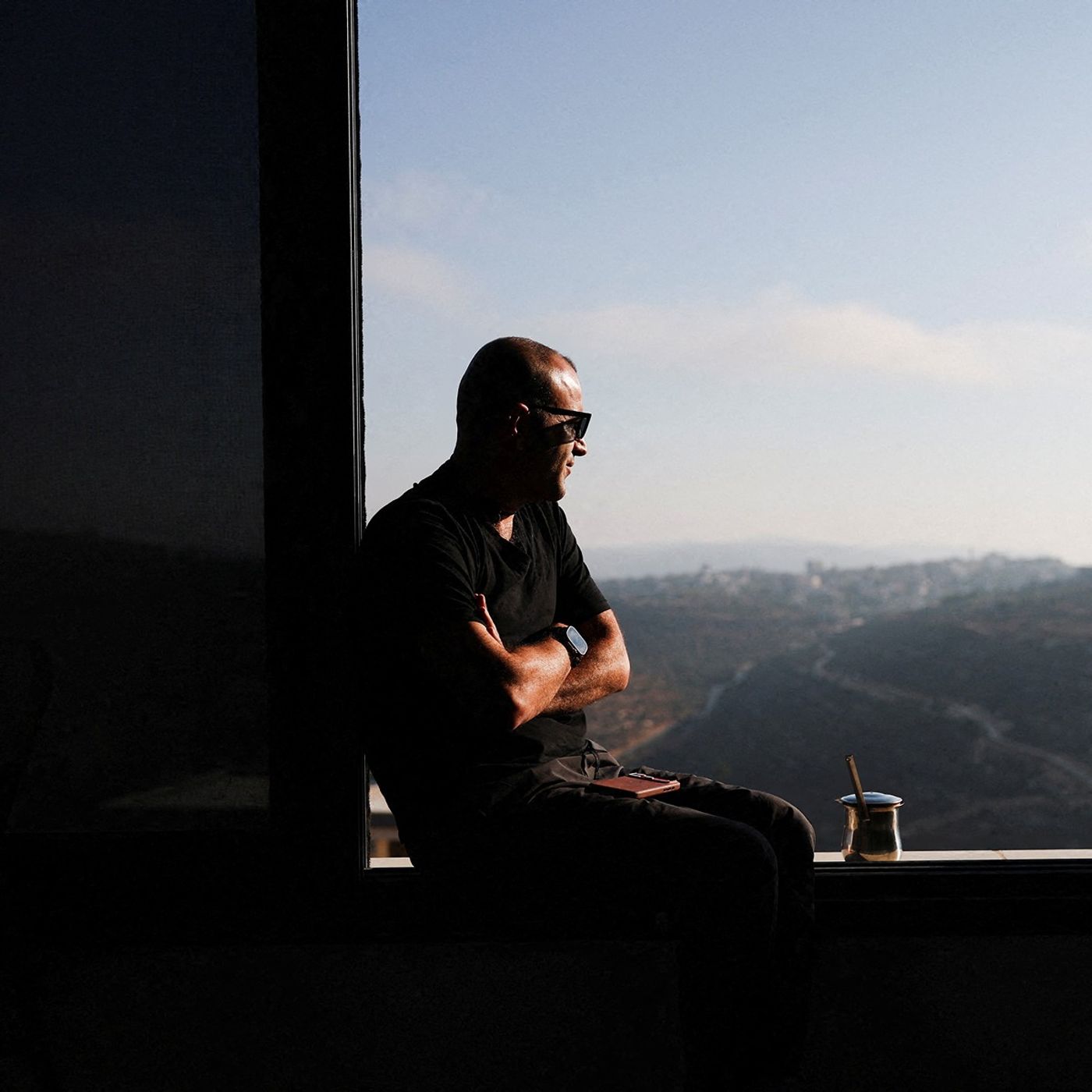
Rachel Abrams speaks to Loui Ridi, a Palestinian American in the West Bank, about the settlers who have arrived at his doorstep.
Guest: Loui Ridi, a Palestinian American in the West Bank.
Background reading:
- With the world distracted by war, extremist settlers have intensified their attacks in the West Bank.
- An assault by Israeli settlers on Palestinians last week drew sharp rebukes.
Photo: Ammar Awad/Reuters
For more information on today’s episode, visit nytimes.com/thedaily. Transcripts of each episode will be made available by the next workday.
Subscribe today at nytimes.com/podcasts or on Apple Podcasts and Spotify. You can also subscribe via your favorite podcast app here https://www.nytimes.com/activate-access/audio?source=podcatcher. For more podcasts and narrated articles, download The New York Times app at nytimes.com/app.
Hosted by Simplecast, an AdsWizz company. See pcm.adswizz.com for information about our collection and use of personal data for advertising.