

🤖 AI Summary
Overview
This episode examines the aftermath of Ayatollah Ali Khamenei's death amidst escalating U.S.-Israeli military strikes on Iran. It explores the polarized reactions within Iran, the regime's precarious state, and the potential for regime change. Farnaz Fassihi provides an in-depth view of the societal, political, and military dynamics shaping this pivotal moment.
Notable Quotes
- The Islamic Republic, as we knew it, is over.
– Farnaz Fassihi, on the potential end of Khamenei's vision for Iran.
- 80% of Iranians oppose the regime, but right now, their priority is survival under bombs.
– Farnaz Fassihi, on the challenges of mobilizing opposition amidst war.
- For many Iranians, the dream is simple: to visit their relatives and their home country again.
– Farnaz Fassihi, on the aspirations of the Iranian diaspora.
🇮🇷 The Death of Ayatollah Khamenei: A Nation Divided
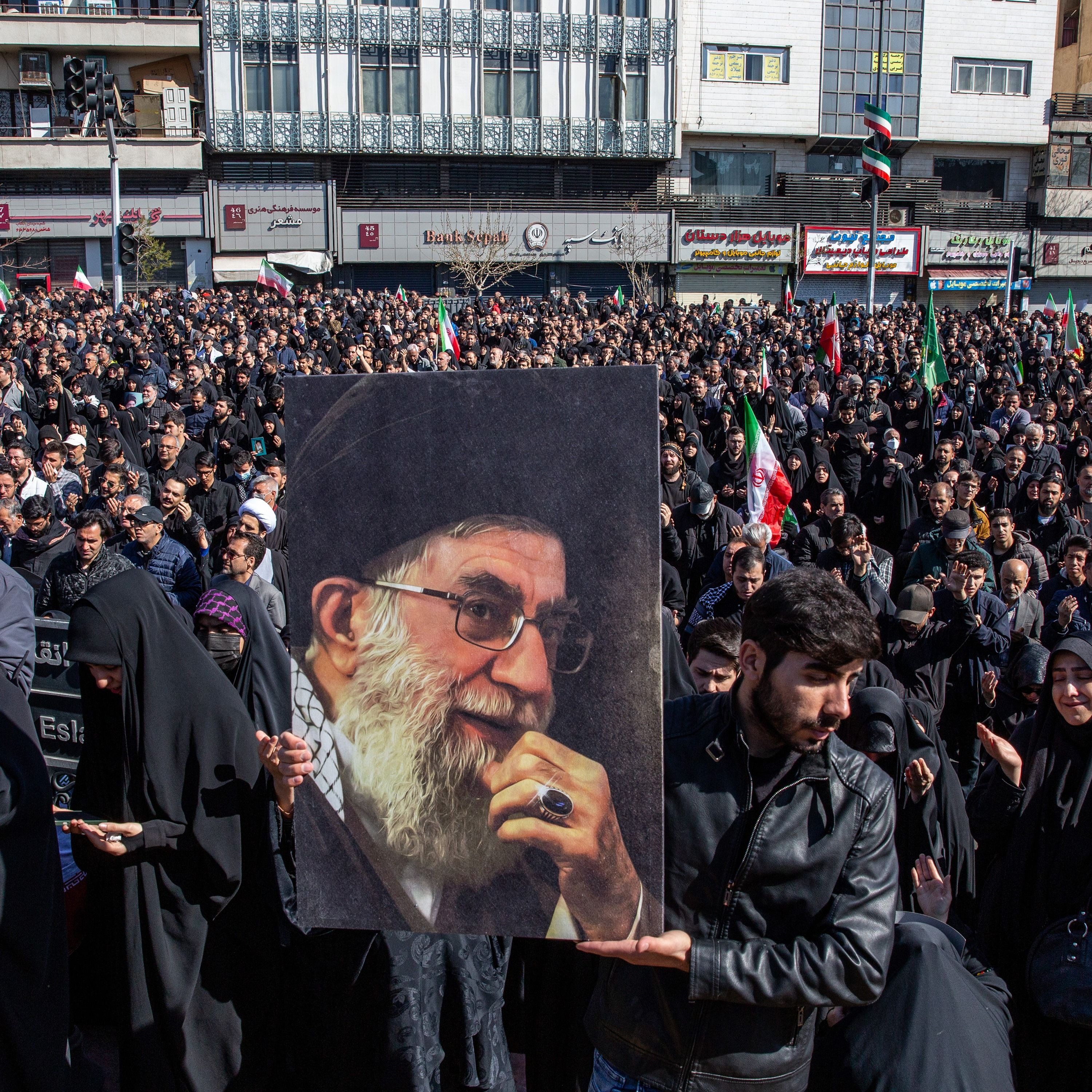
- Khamenei's death has sparked contrasting reactions: celebrations among regime opponents and mourning among loyalists.
- Farnaz Fassihi estimates 80% of Iranians oppose the regime, while 20% remain loyal, based on voting patterns and recent protests.
- Celebrations included street gatherings, honking cars, and chants of Freedom,
while supporters gathered in mosques to grieve.
- The polarized society raises questions about whether reconciliation between these groups is possible.
💣 U.S.-Israeli Strikes and the Regime's Vulnerability
- The strikes targeted not only military sites but also institutions of oppression, such as the Revolutionary Court and state broadcasting.
- Khamenei's death, alongside the killing of key military leaders, represents a massive blow to the regime.
- Despite succession plans, the regime's ability to maintain control is being tested, with checkpoints and military retaliation still ongoing.
- Farnaz Fassihi suggests complacency and miscalculations contributed to the regime's vulnerability.
🌍 The Diaspora's Hope and the Opposition's Challenges
- The Iranian diaspora, scattered globally since the 1979 revolution, sees Khamenei's death as a glimmer of hope for returning to their homeland.
- Opposition forces inside and outside Iran face significant hurdles, including the regime's oppressive tools and lack of unified leadership.
- U.S. and Israeli strikes appear to be aimed at weakening these tools, potentially aiding opposition efforts.
🛑 The Future of the Islamic Republic
- Khamenei's regime, defined by anti-Western policies, proxy militancy, and domestic repression, may not survive in its current form.
- Farnaz Fassihi argues that the Islamic Republic's model is unsustainable given regional and internal pressures.
- The U.S. and Israel face a dilemma: support regime change or engage with a successor from within the current system.
- President Trump has signaled openness to dialogue with new Iranian leaders, which could disappoint those seeking complete regime change.
✨ Dreams of a Free Iran
- Many Iranians dream of a democratic, secular country free from repression and economic hardship.
- The diaspora and opposition hope for a future where political prisoners are freed, and citizens can live without fear of violence.
- Farnaz Fassihi reflects on the profound significance of this moment, describing it as a historic turning point for Iran.
AI-generated content may not be accurate or complete and should not be relied upon as a sole source of truth.
📋 Episode Description
The United States and Israel continued to strike Iran with missiles for a second day on Sunday, destroying more power centers of the Iranian regime and, according to rights groups, bringing the civilian death toll over 100. Iran responded with retaliatory attacks.
At the same time, all eyes were on the Iranian government and the millions of citizens who have long opposed it.
Farnaz Fassihi, who covers Iran for The New York Times, brings us the view from a pivotal moment inside Iran.
Guest: Farnaz Fassihi, the United Nations bureau chief for The New York Times. She also covers Iran and how countries around the world deal with conflicts in the Middle East.
Background reading:
- Iranians took to the streets to celebrate the death of Ayatollah Ali Khamenei.
- Here is the latest on the war.
Photo: Arash Khamooshi for The New York Times
For more information on today’s episode, visit nytimes.com/thedaily. Transcripts of each episode will be made available by the next workday.
Subscribe today at nytimes.com/podcasts or on Apple Podcasts and Spotify. You can also subscribe via your favorite podcast app here https://www.nytimes.com/activate-access/audio?source=podcatcher. For more podcasts and narrated articles, download The New York Times app at nytimes.com/app.
Hosted by Simplecast, an AdsWizz company. See pcm.adswizz.com for information about our collection and use of personal data for advertising.